
Energy Management – A Strategic Investment?
A recent IEA publication explored the role of energy management in optimizing industrial energy demand, and how critical this is to keep the world on track with its energy efficiency targets.
Lee Jukes, Principal Consultant & Energy Auditor at SLR Consulting, picks out some of the key findings and shares insights on building the investment case for energy management.
Energy Management
Energy management is the first tool in the armoury of all successful energy efficiency strategies. Its focus is on metering, monitoring and tracking how energy is used – the intention being to identify opportunities to streamline energy use. Think reducing machinery standby energy usage between production cycles, energy used during downtime, optimising manufacturing processes. Going beyond this – energy management opens the door to the identification of broader energy efficiency opportunities, such as installing top class IE5 motors, investing in heat recovery or procuring a new steam system, to name a few.
IEA Case for Energy Management
In its report, the IEA provides the following insight on the attitude to energy management from industry:
“Although energy management is a proven approach to enhancing the competitiveness of companies and raising their productivity, implementation is not typically or widely viewed as a strategic investment in future”
This reads as somewhat of a paradox. Companies recognise the critical role of energy management in being competitive, but at the same time do not necessarily see it as a strategic lever. This leads to the question of why – do the energy savings justify the strategic importance tag?
The IEA shares with us that industries which adopt an energy management system (EMS), namely ISO 50001, typically achieve savings of 5% year-on-year. In other words, energy savings are there to stay, and replicable. Businesses just starting out on the EMS journey can however expect an average saving of 11% across the first three years. The general percentage savings shared by the IEA tally with our own on- the-ground experience – having worked with site engineers through to directors – to implement multi-year energy programmes.
Digging deeper into the numbers – we see that over ~25% of less energy-intensive industries (note, this does not mean low energy use) achieved greater than a 5% annual saving five or more years after implementation, compared to ~18% for energy-intensive industries.
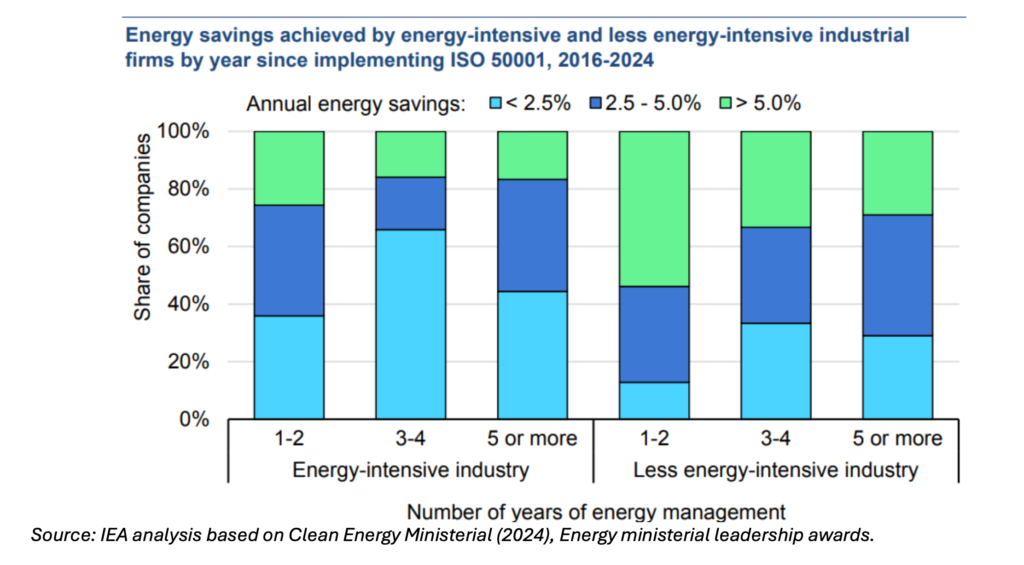
This is expected given the greater focus on energy use within energy-intensive industries – for example, in the Aluminium and Zinc sectors energy can make up as much as 80% of total operational costs. However, it is clear from the insights that IEA provides that even in organisations that are already compelled to keep a watchful eye on energy use; developing and honing an energy management system leads to a positive impact on bottom lines. Even if it is just a couple of percent rather than then 5%-11% quoted above, this quickly adds up in energy hungry sectors which use energy in giga and terawatt-hr quantities.
Framing the Investment Case
With this in mind, how do we encourage more industries and stakeholders to go from recognising the virtues of energy management to treating it as something of strategic importance? Communication is certainly key – framing the investment case in a way that speaks the same language as those making the strategic decisions is critical. One approach is to pose the following question:
How much additional sales would the business need to generate that would equal the energy savings which are on offer?
The below example provides an illustration of how this could look for a £50m turnover organisation with more than 17 million Euros energy spend.
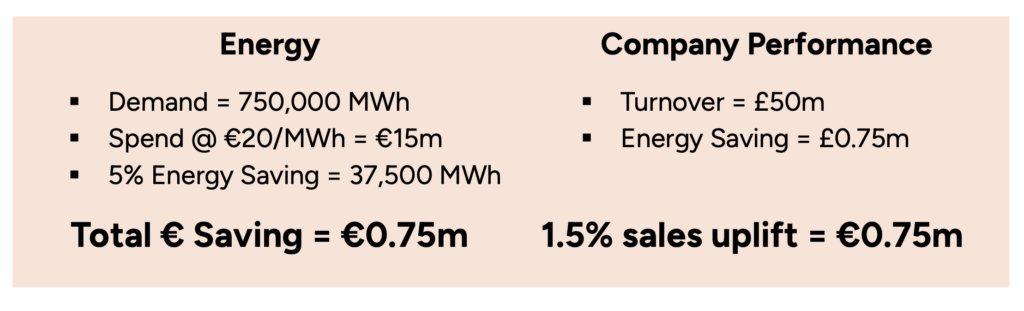
In the above example, an annual energy saving of 5% provides an equivalent business value of a 1.5% uplift in sales. Decision-makers have an idea of the financial investment required to achieve “x” sales uplift by leveraging the ratio of financial turnover to cost of sales/expenditure i.e. the typical return on investment. The investment cost for energy management processes, and energy efficiency opportunities that arise from it, should be assessed in the same way. As a rather substantial side note – it is absolutely critical that the investment case is thorough, engaging appropriate expertise to identify, quantify and sense-check energy saving opportunities.
Summary
The IEA figures tell us that industries with energy management systems save more energy and are more competitive than their peers – something that we can corroborate through our own experiences as consultants. However, energy management is not typically viewed as a strategic lever, which leaves a gap for industry to bridge. How can this be achieved? The answer to that is complex – but a tried and tested formula is to share best practice. Real world examples and case studies of energy success stories – be that through sector-specific fora, or energy efficiency-focused events such as those that the IEA and Energy Efficiency Movement are advocates for.
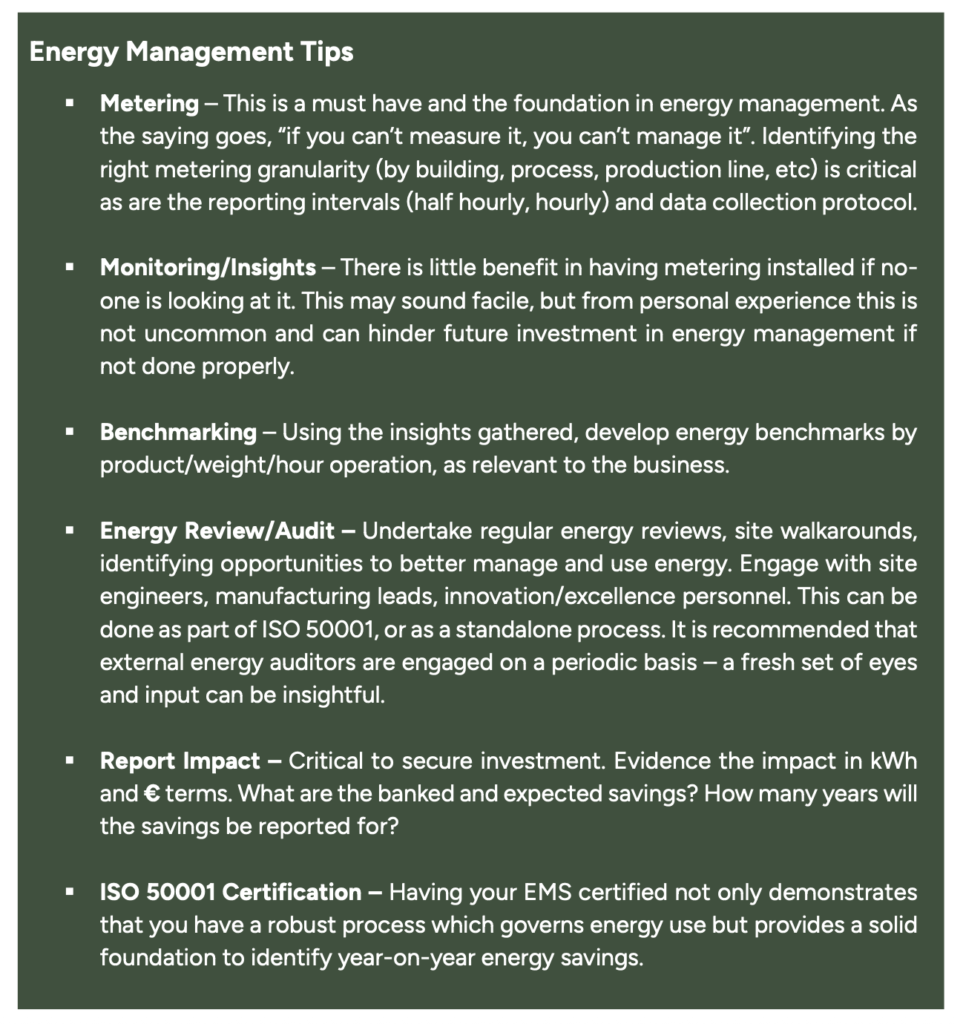
For any organisations not quite sure on where to start with developing an energy management system, see the tips below.
About SLR
SLR Consulting is a global sustainability consultancy whose purpose is ‘Making Sustainability Happen’. They partner with clients to turn ambition into action — delivering expert advisory, engineering and design services across strategy to execution. Their ‘One Team’ culture brings together scientists, engineers, economists and data-experts to tackle complex sustainability challenges across industries.
