Our Output at
Global Events
How we drive impact and best practices
The Energy Efficiency Movement (EEM) plays an active role in key global events by initiating, promoting, moderating and leading public discourse around important topics and endorsing initiatives that are vital for a more energy efficient industrial future.
Our output at global events
London Climate Action Week
London Climate Action Week (LCAW) is one of the world’s largest independent climate events, uniting over 75,000 people across 1,000+ events each June, from community gatherings to international conferences. Now in its eighth edition, it’s a key moment in the global climate calendar, keeping momentum between COPs. The EEM participated for the first time in 2026.
-
2026Topic: Climate Cooperation in a Fractured World
London Climate Action Week
Topic: Climate Cooperation in a Fractured World
London Climate Action Week (LCAW) is one of the world’s largest independent climate events, uniting over 75,000 people across 1,000+ events each June, from community gatherings to international conferences. Now in its eighth edition, it’s a key moment in the global climate calendar, keeping momentum between COPs. The EEM participated for the first time in 2026.
Key messages
Electrification is essential to the energy transition, but its success depends on energy efficiency, which reduces demand, lowers system costs, eases grid constraints, improves energy security, and accelerates decarbonization. Combining efficient electric technologies, waste heat recovery, and demand flexibility enables a more affordable, resilient, and scalable energy system while minimizing the need for costly infrastructure expansion.
There were many discussions around reinforcing that the energy transition is no longer constrained by ambition but by execution. Success depends on making energy efficiency investable, scalable, and embedded within integrated systems that combine efficiency, electrification, renewables, finance, and digitalization. Across LCAW sessions, a consistent message emerged: closing the execution gap, unlocking capital, and fostering global collaboration are essential to turning policy commitments into resilient, competitive, and real-world outcomes at scale.
Our contribution in 2026
Double Down. Triple Up. ElectrifyNow
ElectrifyNow places energy efficiency at the heart of the energy transition, emphasizing that electrification is typically around three times more energy efficient than combustion-based technologies. By replacing fossil-fuel-powered systems with electric alternatives, countries can reduce total energy consumption while improving productivity and lowering costs.
The initiative highlights that electrifying transport, heating, cooling, cooking, and industrial processes delivers a powerful double benefit: increased use of renewable electricity and significant energy efficiency gains, making energy systems more affordable, secure, and sustainable.
The global coalition calls on governments to accelerate electrification through supportive policies and investments, recognizing that energy efficiency and electrification together are among the fastest and most cost-effective pathways to improve energy security, reduce emissions, and strengthen economic competitiveness.
The importance of the moment to seize the momentum was underpinned by a business statement supporting electrification signed by over 100 companies with US$1.5 trillion in combined annual revenue.
Climate Innovation Forum
As the global energy transition accelerates, energy efficiency is emerging as the critical first step – the fastest, most cost‑effective way to reduce emissions, manage rising electricity demand, and strengthen energy resilience. In this fireside chat, we explore how efficiency is driving electrification and renewable integration, enabling smarter energy use before adding new supply, and supporting more decentralised, dynamic, and responsive systems. Grounded in real‑world innovation and collaboration the session highlights how an efficiency‑first approach is already delivering measurable impact in an increasingly complex and energy‑intensive world. Watch “Climate Leader Insight – The Power of Less: How Efficiency is Driving the Energy Transition with Mike Umiker”, Managing Director, Energy Efficiency Movement and Eva Riesenhuber, Global Head of Sustainability, Siemens AG.
We Don’t Have Time high level discussion: Electrification & Energy Efficiency: Driving the Energy Transition
Let’s explore the critical relationship between electrification and energy efficiency, highlighting how both must work together to deliver a secure, affordable, and competitive energy transition. Bringing together experts from industry, policy, finance, and research, the discussion focuses on scaling proven solutions, overcoming implementation barriers, and ensuring that rising electricity demand, from sectors such as AI and data centers—is met in the most efficient way possible
Fifty Shades of Green, with Climate Group
This special vodcast, featuring the Energy Efficiency Movement and Climate Group, explores why energy efficiency remains one of the fastest and most cost-effective solutions for competitiveness, energy security, and net zero, yet continues to lag in large-scale implementation. The discussion brings together leaders from industry, finance, and policy to examine how we can close the gap between ambition and execution and accelerate the deployment of proven energy efficiency solutions.
IEA Annual Global Conference on Energy Efficiency
The International Energy Agency’s (IEA) annual conference on Energy Efficiency brings together politicians, CEOs, non-profits, and thought leaders from around the world to work towards accelerating energy efficiency action and doubling improvements by 2030. The Energy Efficiency Movement has participated actively since 2023 and served as the official partner of the 2025 conference.
-
2026Topic: Energy efficiency is the primary driver to energy security and competitiveness
-
2025Topic: Energy efficiency is the first fuel of the clean energy transition
-
2024Topic: Doubling energy efficiency progress this decade
-
2023Topic: Energy Efficiency: The Decade of Action
IEA Annual Global Conference on Energy Efficiency
Topic: Energy efficiency is the primary driver to energy security and competitiveness
The International Energy Agency’s (IEA) annual conference on Energy Efficiency brings together politicians, CEOs, non-profits, and thought leaders from around the world to work towards accelerating energy efficiency action and doubling improvements by 2030. The Energy Efficiency Movement has participated actively since 2023 and served as the official partner of the 2025 conference.
Key outcomes
The International Energy Agency’s 11th Annual Global Conference on Energy Efficiency was co-hosted by IEA Executive Director Dr Fatih Birol and the Government of Canada in Montreal, Canada, on 29–30 June 2026. The event was held in partnership with the Energy Efficiency Movement who co-lead the CEO Roundtable in partnership with Hydro-Quebec.
The conference took place against a backdrop of growing energy demand, increasing geopolitical uncertainty, rising electricity consumption from AI and digital infrastructure, and the urgent need to improve industrial competitiveness and energy security. Across the two-day event, a clear message emerged: energy efficiency is no longer only a climate solution, it is a strategic tool for energy security, affordability, resilience, and economic growth.
Key Messages from the Conference
– Energy security underpins economic security, making energy efficiency a strategic priority for governments and businesses alike.
– Energy efficiency remains the fastest and most cost-effective way to reduce energy demand, lower costs, and strengthen resilience.
– Electrification and energy efficiency must progress together to support growth while maintaining affordable and reliable energy systems.
– Buildings, heating and cooling systems, and industrial processes represent some of the largest untapped opportunities for efficiency gains.
– AI presents both a challenge and an opportunity, increasing electricity demand while enabling new forms of optimization and energy savings.
– Unlocking financing remains critical, requiring stronger collaboration between industry, governments, and financial institutions.
– SMEs must be part of the transition, as efficiency improvements can significantly improve competitiveness and resilience.
– Public-private partnerships, policy certainty, and knowledge sharing will be essential to accelerate implementation at scale.
Montreal Collaboration Framework
The Montreal Collaboration Framework’s aim is to accelerate implementation and collaboration between industry, policy maker’s and financial institutions to double the rate of energy efficiency progress by 2030. Building on outcomes from previous IEA Global Energy Efficiency Conferences, it shifts the focus from ambition to delivery. While earlier efforts established priorities and momentum, this Framework is designed to move from commitment and pilots to coordinated deployment, bankable project pipelines, and system level implementation. Its core value lies in simplifying how key actors must act simultaneously and in coordination to overcome fragmentations, reduce risk, and accelerate progress at scale. The outcome reflects the discussions held during the CEO roundtable and does not necessarily represent the offical views of the IEA or its member countries.
Looking Ahead
The overall tone of the conference was one of optimism. While challenges remain around rising demand, grid capacity, and financing, participants expressed strong confidence that energy efficiency, electrification, digitalization, and stronger public-private collaboration can deliver a more secure, affordable, competitive, and sustainable energy future.
The conference concluded with a shared recognition that the technologies and solutions already exist. The next step is accelerating deployment through stronger partnerships, investment, policy leadership, and implementation at scale.
The Energy Efficiency Movement was proud to contribute to:
– Hosting the official Welcome Reception along with the IEA Youth Energy Efficiency Leadership Award
– Co-leading the CEO Roundtable with Hydro-Quebec
– Co-moderating the session on “Driving energy efficiency for a competitive industrial sector”
CEO Roundtable
The Energy Efficiency Movement co-led the exclusive CEO Roundtable alongside Hydro-Québec, bringing together senior business leaders from around the world for a high-level discussion on how energy efficiency can strengthen competitiveness, energy security, affordability, and resilience.
Participants emphasized the need for closer collaboration between industry, policymakers, financial institutions, and technology providers to accelerate the deployment of proven energy efficiency solutions at scale. The discussion reinforced that long-term policy certainty, trust-based partnerships, and coordinated action across sectors are critical to unlocking investment and delivering measurable impact.
A notable development this year was the increased focus on engaging financial institutions directly in the conversation. Recognizing that financing remains one of the key barriers to scaling energy efficiency, participants explored how industry and finance can work together to create investable projects, improve risk-sharing mechanisms, and develop a common language around energy efficiency investment.
The outcome of the roundtable was the Montreal Collaboration Framework, which captures the shared commitment of business leaders and stakeholders to accelerate energy efficiency deployment through stronger public-private collaboration, greater investment, and collective action across the global energy ecosystem.
To the Montreal Collaboration Framework
Driving energy efficiency for a competitive industrial sector, with ABB
During this session focused on industrial competitiveness, speakers highlighted energy efficiency as one of the most effective tools available to strengthen industrial performance while supporting decarbonization objectives.
Participants emphasized that successful industrial efficiency programs require:
– Long-term policy commitment.
– Trust between public and private sectors.
– A systems-wide approach.
– Strong measurement and energy management practices.
– Collaboration between industry, finance, utilities, and governments.
A recurring message was that many efficiency opportunities already exist today through process optimization, electrification, heat recovery, digitalization, and proven technologies that can be deployed immediately.
AI for Energy Efficiency, with Alfa Laval
Artificial intelligence emerged as one of the conference’s most discussed topics. While AI-driven data centres are becoming one of the fastest-growing sources of global electricity demand, participants also highlighted AI’s significant potential to improve energy performance across buildings, industry, utilities, and energy systems.
Key themes included:
– Energy-efficient design, advanced cooling technologies, and waste heat recovery will be critical for sustainable data centre growth.
– AI-enabled building management systems and industrial optimization tools are already delivering measurable energy savings.
– Digitalization, data transparency, and strong cybersecurity foundations are prerequisites for scaling AI applications.
– AI should support human decision-making, helping organizations identify opportunities for efficiency and performance improvements.
– Grid optimization, forecasting, and demand management represent some of AI’s largest opportunities for system-wide energy savings.
Financing Energy Efficiency, with Siemens
Despite its strong business case, energy efficiency remains significantly underfunded compared to other clean energy investments.
Discussions focused on how governments, financial institutions, technology providers, and industry can work together to overcome financing barriers.
Key recommendations included:
– Standardizing measurement and reporting frameworks.
– Aggregating smaller projects to attract capital.
– Expanding energy-efficiency-as-a-service models.
– Increasing transparency through digital tools and AI-enabled performance monitoring.
– Utilizing blended finance and risk-sharing mechanisms to unlock private investment.
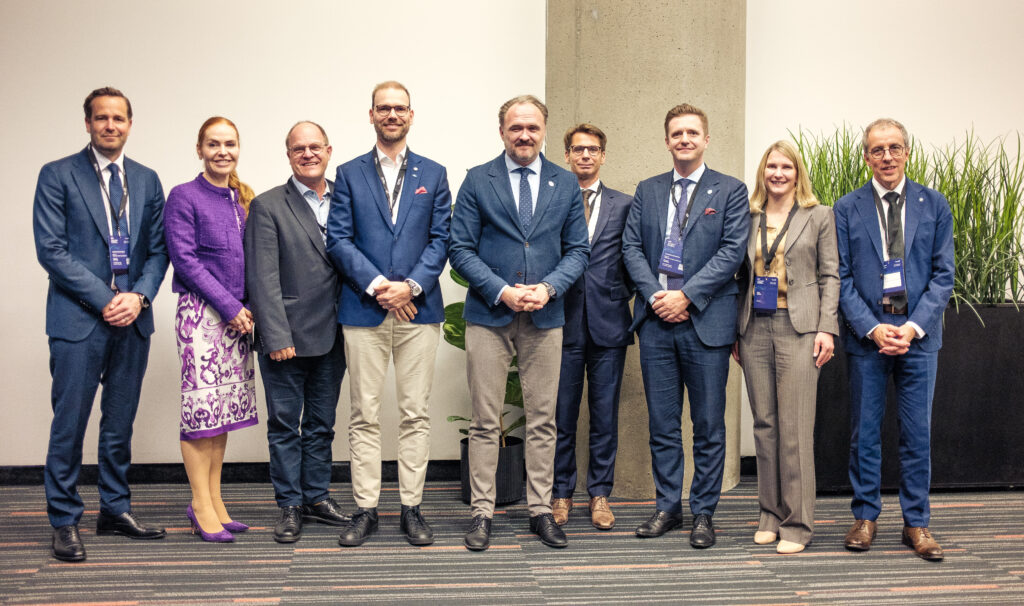
Hight level C-Suite Meeting with Commissioner for Energy and Housing Dan Jørgensen, organized by the Energy Efficiency Movement.
A pre-selected group with Core, Active and Movers beside financial instituations enjoyed the opportunity in participating a small group of people to discuss: Securing Europe’s energy future and enhancing industrial competitiveness. The focus was on strengthening public-private sector’s collaboration, the meeting supported accelerated global progress on energy efficiency and highlighted the role of the European Commission.
IEA Annual Global Conference on Energy Efficiency
Topic: Energy efficiency is the first fuel of the clean energy transition
The International Energy Agency’s (IEA) annual conference on Energy Efficiency brings together politicians, CEOs, non-profits, and thought leaders from around the world to work towards accelerating energy efficiency action and doubling improvements by 2030. The Energy Efficiency Movement has participated actively since 2023 and served as the official partner of the 2025 conference.
IEA Official Outcomes
The key outcome of the 10th Annual Global Conference on Energy Efficiency was the adoption of the Brussels CEO Four-Point Action Plan, endorsed by ministers and private-sector leaders to accelerate progress toward doubling efficiency by 2030.
The conference convened over 600 participants from around the world, uniting policymakers and organizations from the private and public sector around the shared goal of placing efficiency at the core of competitiveness, affordability, and security.
Roundtables and thematic sessions emphasized digitalization, innovation, and workforce development as enablers of large-scale deployment of efficient technologies. The dialogue went beyond technology – touching on consumers, financing models, and policies that make the energy transition inclusive and beneficial for everyone. The outcomes reinforced the message that energy efficiency is the first fuel for sustainable growth – a foundation for climate neutrality, job creation, and resilient, affordable energy systems worldwide.
Our contribution in 2025
Energy Efficiency Movement served as the official partner and co-host of the IEA’s 10th Annual Global Conference on Energy Efficiency. We organized and hosted the CEO roundtable, joined by leading companies worldwide. We developed the CEO Letter of Commitment, signed by 18 companies.
IEA Annual Global Conference on Energy Efficiency
Topic: Doubling energy efficiency progress this decade
The International Energy Agency’s (IEA) annual conference on Energy Efficiency brings together politicians, CEOs, non-profits, and thought leaders from around the world to work towards accelerating energy efficiency action and doubling improvements by 2030. The Energy Efficiency Movement has participated actively since 2023 and served as the official partner of the 2025 conference.
IEA Official Outcomes
The key outcome of the 9th Annual Global Conference on Energy Efficiency was the launch of the Energy Efficiency Policy Toolkit 2024: From Versailles to Nairobi.
This toolkit outlined concrete pathways for governments and industries to accelerate efficiency adoption and meet the global goal of doubling progress by 2030. A series of policy and sectoral roundtables explored solutions for scaling up investment, strengthening policy frameworks, and expanding access to affordable clean energy.
The discussions highlighted the role of energy efficiency in enabling energy security, reducing emissions, and supporting inclusive growth. Participants also examined how digital tools, workforce training, and innovative financing can bridge the implementation gap. The outcomes ultimately called for greater cooperation between governments, businesses, and civil society to transform efficiency from ambition into measurable action across every part of the economy.
Our contribution in 2024
The Energy Efficiency Movement co-hosted and facilitated a high-level roundtable that resulted in the Nairobi Business Leaders Action Plan for Public-Private Collaboration to Double Energy Efficiency Progress by 2030.
IEA Annual Global Conference on Energy Efficiency
Topic: Energy Efficiency: The Decade of Action
The International Energy Agency’s (IEA) annual conference on Energy Efficiency brings together politicians, CEOs, non-profits, and thought leaders from around the world to work towards accelerating energy efficiency action and doubling improvements by 2030. The Energy Efficiency Movement has participated actively since 2023 and served as the official partner of the 2025 conference.
IEA Official Outcomes
The key outcome of the 8th Annual Global Conference on Energy Efficiency was the Versailles 10X10 Actions. A series of roundtables took place to ultimately outline a joint 10-point strategy for concrete actions towards generating greater energy efficiency.
The list of actions reflects the notions raised in the conversations, particularly highlighting the role of energy efficiency and digitalization in tackling the global energy crisis. The round tables covered energy efficiency in all walks of life from industry and infrastructure to buildings, homes and beyond.
The outcomes of the conference concentrated on identifying concrete solutions and making real commitments to improving energy efficiency. While the adoption and implementation of energy efficient technologies continue to be high on the list of priorities, the discussions also focused on aspects related to financing, the workforce and ultimately the motivation of us as consumers.
Our contribution in 2023
EEM hosted its inaugural symposium alongside the conference, marking the Movement’s formal introduction to the IEA’s global platform.
Climate Week NYC
Climate Week NYC is an annual climate-action gathering, organized by Climate Group and held alongside the UN General Assembly, that brings together business, government and civil society leaders in search of practical solutions for decarbonisation and resilience. The Energy Efficiency Movement officially first took part in 2024.
-
2026Topic: Energy. Impact. Action
-
2025Topic: Power On for Climate Action
-
2024Topic: It’s Time.
Climate Week NYC
Topic: Energy. Impact. Action
Climate Week NYC is an annual climate-action gathering, organized by Climate Group and held alongside the UN General Assembly, that brings together business, government and civil society leaders in search of practical solutions for decarbonisation and resilience. The Energy Efficiency Movement officially first took part in 2024.
Climate Week NYC 2026 – Driving implementation through energy efficiency, electrification, finance and industrial competitiveness
A consistent theme throughout Climate Week NYC 2026 was that the climate transition has entered an implementation era. Discussions focused less on setting new targets and more on deploying proven solutions at scale, mobilizing capital, expanding infrastructure, and accelerating delivery across industry, buildings, transport, and power systems.
Across energy-focused sessions, electrification was widely recognized as a key pathway for decarbonization, competitiveness, and energy security. However, many speakers emphasized that electrification alone will not be sufficient. Energy efficiency emerged repeatedly as a critical enabler that can reduce costs, lower energy demand, improve system resilience, and avoid the need for significant additional energy infrastructure.
A growing focus was placed on the role of finance and investment. Industry leaders, financial institutions, and policymakers highlighted the need for standardized metrics, stronger business cases, project aggregation, and better risk frameworks to unlock investment in energy efficiency at scale.
Another key message was that climate action is increasingly being viewed through the lens of economic competitiveness, resilience, and national security. Organizations that invest in efficiency, digitalization, electrification, and resilient infrastructure today are expected to be better positioned to manage future risks and create long-term value.
The Energy Efficiency Movement participated actively throughout Climate Week NYC 2026, convening leaders from industry, finance, and policy to accelerate deployment of proven energy efficiency and electrification solutions. Through flagship events, industry-finance roundtables, and external speaking engagements, the EEM helped elevate the role of energy efficiency as a driver of competitiveness, resilience, affordability, and investment.
The Twin Engines of Transition: Efficiency and Electrification
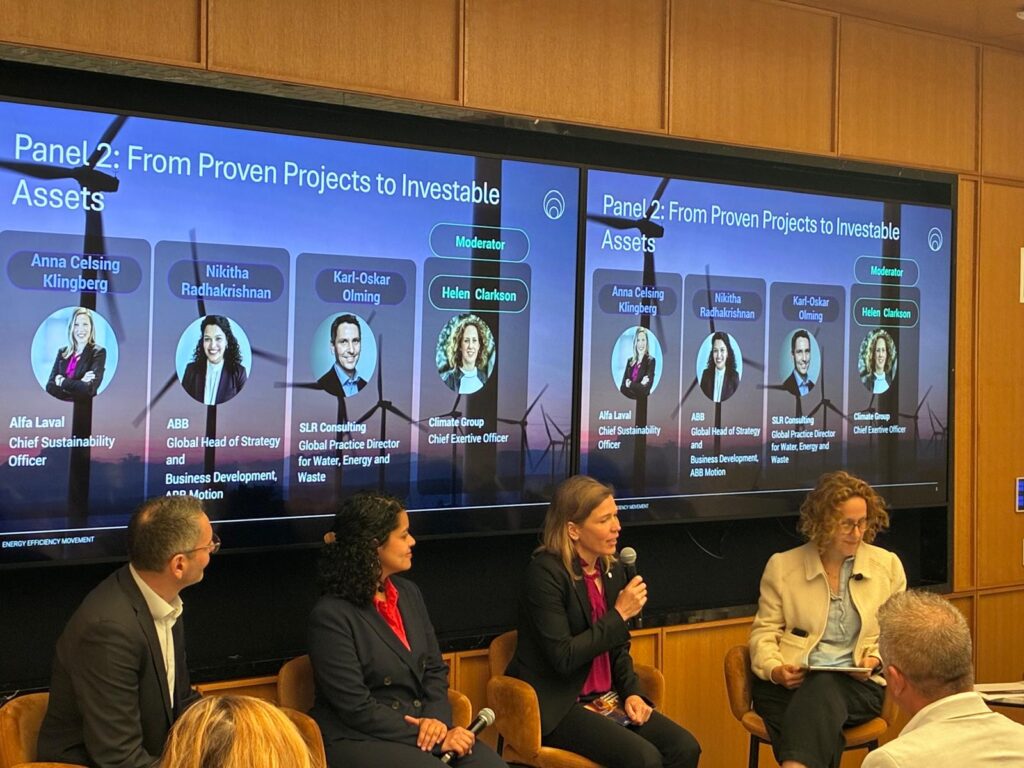
Hosted by the Energy Efficiency Movement and Siemens, this flagship event brought together leaders from industry, finance, and sustainability to examine how energy efficiency and electrification can accelerate the energy transition.
The first panel explored how organizations can scale proven efficiency solutions, while the second focused on closing the gap between available capital and project deployment. Discussions highlighted the need to move beyond cost-saving narratives and position energy efficiency as a driver of resilience, competitiveness, productivity, and risk reduction.
The second panel emphasized that the challenge is no longer proving the value of efficiency but creating financing structures that allow projects to scale. Key themes included project aggregation, standardization, stronger performance data, and repositioning efficiency as a resilience and risk-management strategy rather than solely a cost-reduction measure.
From Energy Efficiency to Investment: Industry-Finance Roundtable
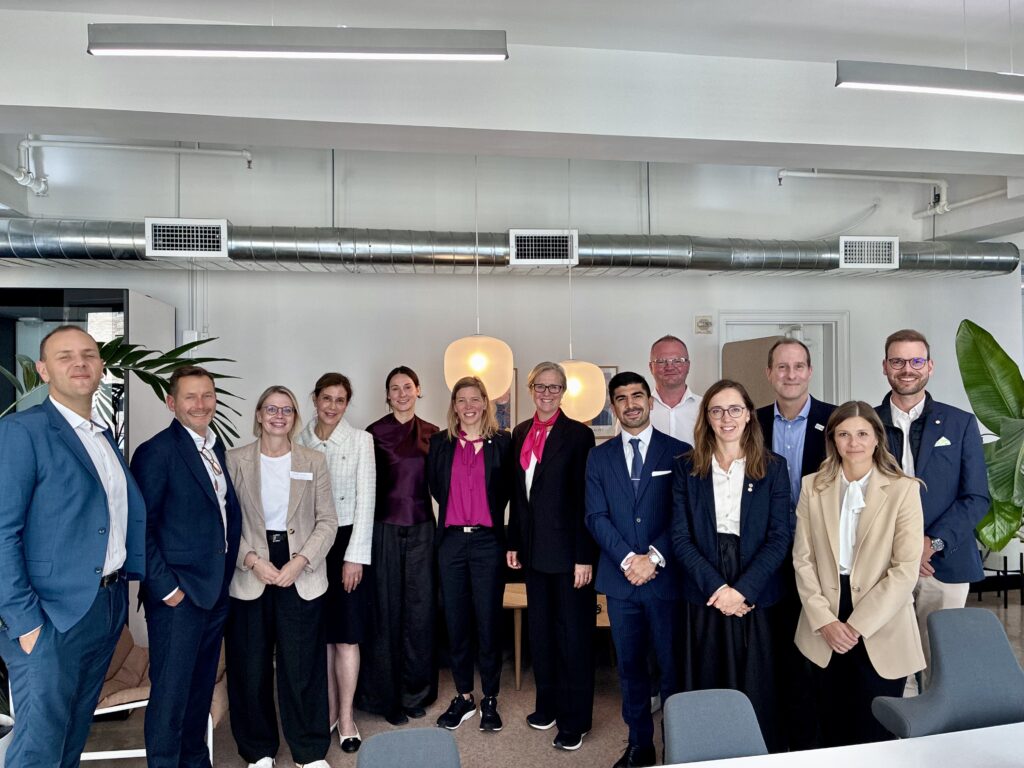
Convened by the Energy Efficiency Movement and held under the Chatham House Rule, this invitation-only roundtable brought together senior representatives from industry and finance to identify practical pathways for increasing investment into energy-efficiency projects.
Discussions focused on creating a common language between industrial companies and financial institutions, standardizing business cases and investment metrics, aggregating smaller projects into larger portfolios, and demonstrating wider value streams including competitiveness, resilience, productivity, and capacity benefits.
Future Factories: How Efficiency, Electrification and AI Will Remake Modern Manufacturing
Mike Umiker joined Climate Group’s discussion on how emerging technologies are reshaping industrial competitiveness and sustainability.
The session highlighted how energy efficiency and electrification must work together to create more affordable and scalable decarbonization pathways. Speakers also explored how AI, predictive analytics, digital twins, and advanced controls are already delivering measurable improvements in energy performance, productivity, and operational resilience.
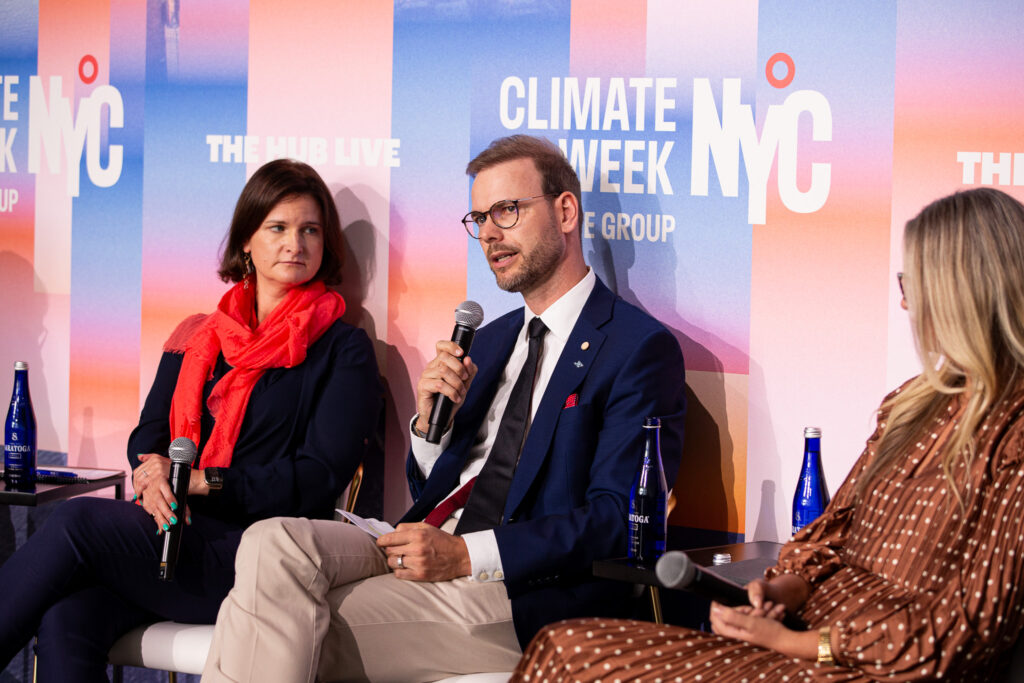
Climate Week NYC
Topic: Power On for Climate Action
Climate Week NYC is an annual climate-action gathering, organized by Climate Group and held alongside the UN General Assembly, that brings together business, government and civil society leaders in search of practical solutions for decarbonisation and resilience. The Energy Efficiency Movement officially first took part in 2024.
Climate Week NYC highlights
The 2025 Climate Week NYC centred on shifting from promise to performance, emphasising execution over rhetoric. Across panels and workshops the message was clear: the clean-economy transition is underway, but it must scale, addressing majour energy challenges such as data centres and digital infrastructure energy consumption to clean cooking.
Key themes included the convergence of AI & climate, circular supply-chains, and the integration of affordability, equity and energy security into climate action. Businesses, investors and sub-national governments were urged to anchor climate ambition in measurable outcomes and inclusive delivery, moving beyond announcements to systems change, investment impact and real-world resilience.
Our contribution in 2025
The Energy Efficiency Movement’s Managing Director, Mike Umiker emphasized the importance of doubling down on energy efficiency targets and converting momentum into measurable action during a We Don’t Have Time interview alongside Bruce Doubglas, CEO of Global Renewables Alliance.
WDHT interview with Mike Umiker and Bruce Doubglas
“Tripling up / Doubling down – let’s Power ON”
Climate Week NYC
Topic: It’s Time.
Climate Week NYC is an annual climate-action gathering, organized by Climate Group and held alongside the UN General Assembly, that brings together business, government and civil society leaders in search of practical solutions for decarbonisation and resilience. The Energy Efficiency Movement officially first took part in 2024.
Climate Week NYC highlights
The 2024 Climate Week NYC saw the launch of the Global To-Do List which outlines 7 key climate actions across key sectors. Among the 7 important action points, we saw the urgent prompt to stop ignoring energy efficiency.
The event’s key takeaway was a global call to all governments, businesses and the global climate community to commit to bolder annual to-do lists for concrete actions.
Climate Group called for more radical actions to work on current lack of delivery. They stated that urgent, concrete action is needed to address the emissions gap between what scientists say is needed to avoid disastrous climate change, and what governments and business are currently delivering.
Our contribution in 2024
The Energy Efficiency Movement brought industrial energy efficiency into the spotlight in an interview where EEM Managing Director, Mike Umiker and Anna Hall, Head of Public Affairs discussed the untapped potential of energy efficiency in industrial processes.
The EEM communicated its core mission and values to a wider audience and highlighted the importance of collaboration in order to be able to meet critical targets to ensure the future. Discussions focused on the implications of energy efficiency in an industrial context as well as the challenges related to unlocking the finances needed to reach ambitious targets.
Conference of the Parties (COP)
The Conference of the Parties (COP) is the UN’s annual climate summit where countries review progress on the Paris Agreement, negotiate emissions goals, and coordinate global actions to limit climate change and support sustainable, low-carbon development. The Energy Efficiency Movement was first represented at COP28 in 2023.
-
2025COP30 was held on November 10-21, 2025
-
2024Topic: Investing in a livable planet for all
-
2023Topic: Climate action can’t wait
Conference of the Parties (COP)
COP30 was held on November 10-21, 2025
The Conference of the Parties (COP) is the UN’s annual climate summit where countries review progress on the Paris Agreement, negotiate emissions goals, and coordinate global actions to limit climate change and support sustainable, low-carbon development. The Energy Efficiency Movement was first represented at COP28 in 2023.
COP30 Official Outcomes
COP30, held in Belém, Brazil, delivered a mixed yet meaningful set of outcomes – a significant step toward implementation and resilience in global climate action. Energy efficiency emerged as a critical, cost-effective lever for lower emissions, strengthen energy security and enable a just and inclusive transition.
Among the main outcomes, Parties adopted the Belém Political Package, including a commitment to triple adaptation finance by 2035 and the first-ever common set of Global Goal on Adaptation indicators to track resilience across sectors.
COP30 also established a new just transition mechanism to coordinate support for workers, communities and countries shifting away from carbon-intensive assets. Two voluntary cooperation platforms were launched as well: the Belém Mission to 1.5 (to boost national ambition) and the Global Implementation Accelerator (to support delivery of mitigation and adaptation measures).
However, COP30 fell short on one major expectation: Parties did not agree on a fossil-fuel phase-out, and the final text includes no roadmap for it. The topic will instead advance through voluntary initiatives outside the formal negotiations.
Our contribution in 2025
The Energy Efficiency Movement highlighted the central role of efficiency in achieving net zero. The Movement’s active contribution included hosting a broadcast session, a round-table discussion and a high-level panel discussion all around the topic of energy efficiency and scalable actions that could accelerate the energy transition. EEM continued to put the spotlight on industrial efficiency, digital energy management and public-private cooperation. Through its participation, the Movement reinforced the importance of turning ambition into measurable progress.
EEM at COP30: Advancing Scalable Energy Efficiency Implementation
Download: EEM Roundtable Outcomes »
EEM at COP30 – Efficiency in Action: The Silent Driver of Competitiveness
Cop 30 – November 11
Conference of the Parties (COP)
Topic: Investing in a livable planet for all
The Conference of the Parties (COP) is the UN’s annual climate summit where countries review progress on the Paris Agreement, negotiate emissions goals, and coordinate global actions to limit climate change and support sustainable, low-carbon development. The Energy Efficiency Movement was first represented at COP28 in 2023.
COP29 Official Outcomes
The key outcome of the 29th Conference of the Parties was the agreement on a new “collective quantified goal” on climate finance, committing to mobilise US$300 billion annually by 2035, and laying the foundation for a longer-term target of US$1.3 trillion per year.
Negotiations also finalised rules for the global carbon marketplace under Article 6 and advanced private-sector climate action via the Marrakech Partnership, yet efforts to accelerate fossil-fuel phase-out remained stalled. Delegates focused on aligning ambition with action across mitigation, adaptation and finance while emphasising partnerships across sectors.
Despite the progress, developing countries voiced strong disappointment in the scale and timing of the commitments. Ultimately, COP29 spotlighted climate finance and mechanisms, signalling a shift toward leveraging investment and markets — but underlined that much more remains to be delivered.
Our contribution in 2024
The Energy Efficiency Movement hosted the live-streamed session “Financing and Investments to Double the Rate of Energy Efficiency Implementation by 2030: Success Factors, Challenges, and Actions Needed Now“. The discussion, moderated by Madeleine Gilborne, EEM ambassador and Vice President of Alfa Laval’s Energy Division, explored pathways to accelerate global efficiency investment.
Conference of the Parties (COP)
Topic: Climate action can’t wait
The Conference of the Parties (COP) is the UN’s annual climate summit where countries review progress on the Paris Agreement, negotiate emissions goals, and coordinate global actions to limit climate change and support sustainable, low-carbon development. The Energy Efficiency Movement was first represented at COP28 in 2023.
COP28 Official Outcomes
The key outcome of the 28th Conference of the Parties was the completion of the first global stocktake under the Paris Agreement and the launch of the “UAE Consensus”, calling for a transition away from fossil fuels in energy systems for the first time in a COP decision.
The event also set ambitious collective goals to triple renewable energy capacity and double energy-efficiency improvements by 2030. Roundtables spanned fossil-fuel phase-out pathways, adaptation action and loss-and-damage funding – notably establishing the long-awaited Loss & Damage Fund to support vulnerable countries.
While the outcome generated historic breakthroughs, it also underlined significant gaps in finance, implementation, and adaptation readiness. The message was clear: the battle against climate change is real, urgent, and demands cooperation across governments, business and civil society.
Our contribution in 2023
The Energy Efficiency Movement (EEM) was represented at COP28 by Managing Director Mike Umiker, who joined bilateral meetings, Green Zone events, and key panels. A key highlight was the webinar covering the “The Case for Industrial Energy Efficiency”, featuring experts from the IEA, Microsoft, and Alfa Laval.
