The Case for Industrial
Energy Efficiency
Economic and Climate Impacts
Goals
Create a cleaner, healthier, safer world by building an energy efficiency foundation, driving efficiency returns and gaining efficiency insights.
Deliver industry savings of $437 billion.
Save 11% of global energy-related carbon emissions by 2030.
Doubling Energy Efficiency Is Industry’s Biggest Emissions Ally This Decade
Doubling energy efficiency by 2030 could cut greenhouse gas emissions by almost a third compared to today’s levels, according to the International Energy Agency (IEA). And for industrial players, the opportunity is immense
The Energy Efficiency Movement estimates that if applied across industry the 10 simple measures in this guide could save almost 2 billion metric tons (gigatons) of carbon emissions a year by 2025, and more than 4 gigatons by 2030.
That’s equal to taking around three-fifths of the world’s internal combustion vehicles off the roads —while saving roughly $437 billion by the end of the decade. Read on to find out how.
There is no underestimating the challenge facing industry as it strives to meet global decarbonization targets while addressing growing demand.
In 2021, the world’s industrial players consumed more energy than the whole of China, emitting 9 billion metric tons of carbon dioxide or 45% of total direct greenhouse gas emissions from end-use sectors, according to the IEA.
And given that demand for industrial products is set to rise, with crude steel output growing 30% by 2050, for example, “There is no way to reach net zero emissions without strong and coordinated action on emissions reduction in the industry sector,” says the IEA.
This means industrial greenhouse gas emissions need to be almost completely eradicated in less than three decades. Never before has industry faced a requirement for such deep transformation.
9B Tons of CO₂
Produced in 2021
Steel Demand by 2050:
+30%
Furthermore, different industries face different decarbonization challenges and pathways. This means there is no one size that can fit all circumstances.
However, industry has one thing on its side in its attempts to reduce emissions: most industrial players can achieve significant cost and emissions savings today simply through greater energy efficiency.
In some cases, the savings arising from efficiency measures mean that transformation projects can be self-funding. Elsewhere, investments in efficiency can serve as a valuable hedge against energy and carbon price volatility, improving energy security while helping to meet voluntary targets and regulatory goals.
This guide builds on “The industrial energy efficiency playbook”, launched in 2022 by the Energy Efficiency Movement.
It aims to give corporate leaders key insights into 10 measures that rely on mature technologies, have a meaningful impact on costs and emissions and can be deployed quickly without complex or expensive projects. The annual aggregated carbon savings associated with these 10 measures are summarized below.
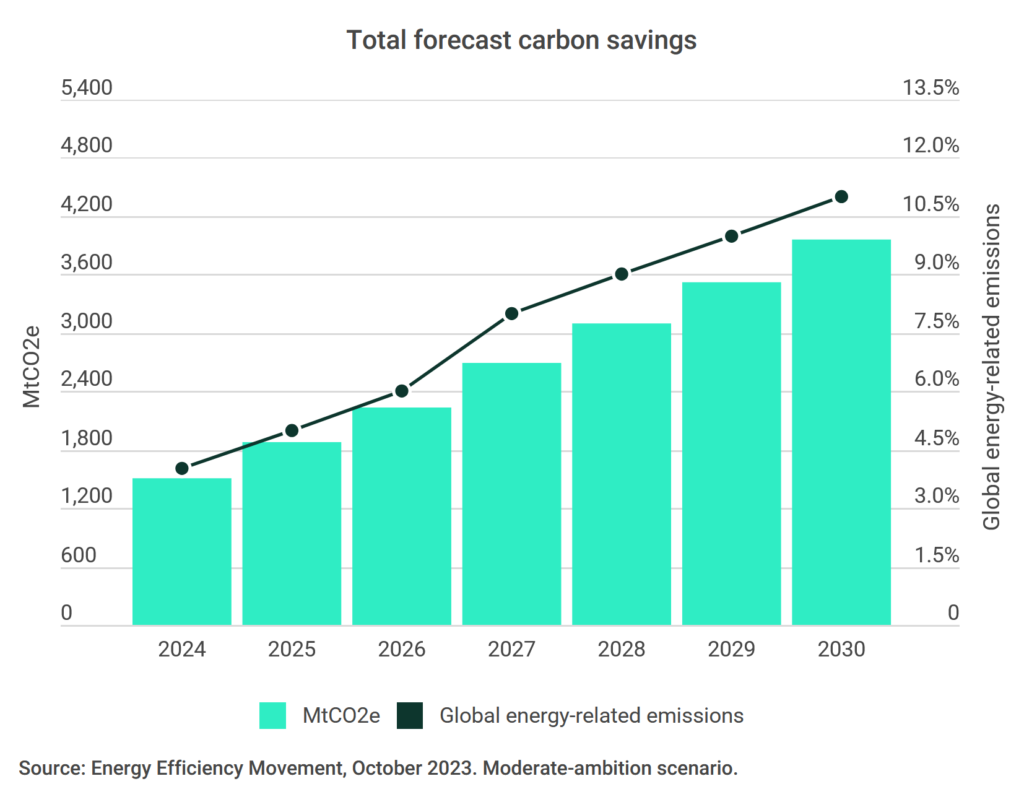
For the purposes of this analysis, “industry” refers to the steel, aluminum, chemicals, paper, and cement sectors, as well as IEA-classified “light industry,” including food, machinery, textiles, vehicles, timber, construction, and mining. In some cases, emissions from “buildings” and “transport” sectors may also be in scope. Source: https://www.iea.org/energy-system.
The measures could also save industry billions of dollars a year while reducing air pollution, saving natural resources and improving productivity.
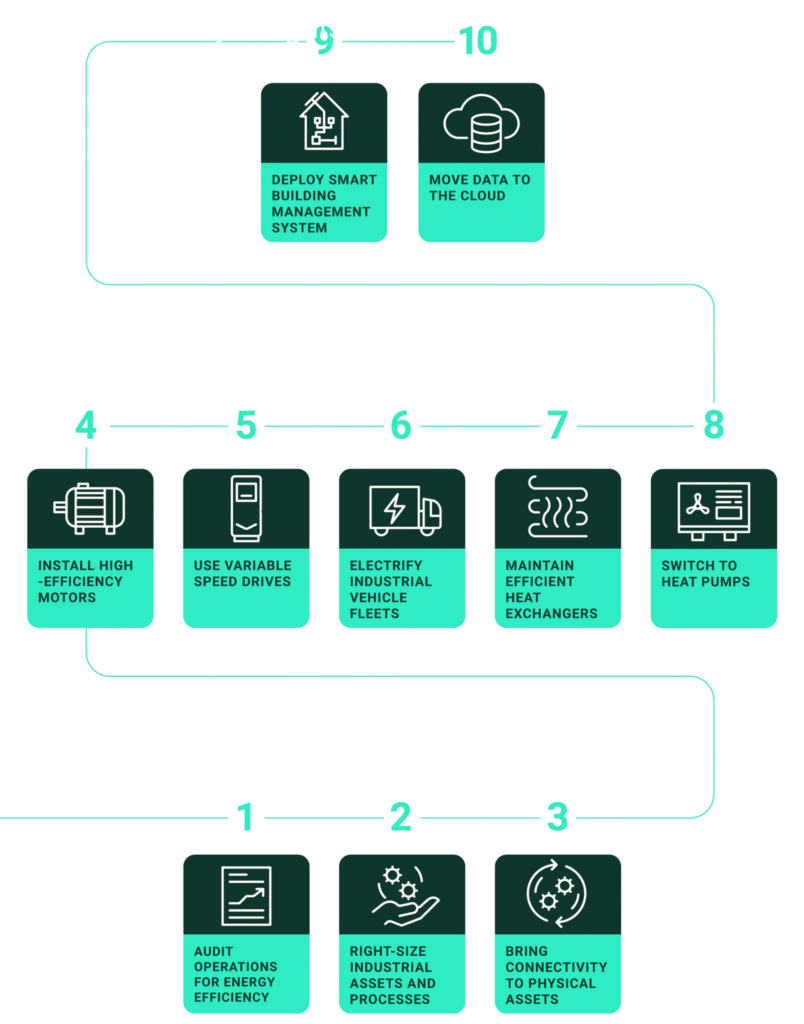
They are listed in order to deliver a logical sequence of results, with foundational actions first, followed by those that provide growing returns and are based on increasing levels of insight, although for each organization the relative importance and complexity of each measure will vary.
.
10 Key Energy Efficiency Actions for Industrial Leaders
The intention is for leaders to use this report as a starting point for enterprise-wide energy efficiency programs, and to this end, each measure is accompanied by a more detailed model setting out the economic and climate case for investment. These models can be accessed from the button below.
While all the measures in this guide are valuable contributors to savings and emissions reduction our analysis shows that three—connecting assets, installing heat pumps and creating smarter buildings— could deliver around 70% of the total energy efficiency benefit available to industry.
As a first step, we encourage you to join the #energyefficiencymovement, a forum where businesses, investors, public decision makers, academia, non-governmental organizations and individuals can share energy challenges and discuss ideas and lessons learned.
Why you need a strategic approach
to energy efficiency
Energy efficiency, dubbed the “first fuel” by the IEA, is underappreciated and underutilized. Moves to harness efficiency are sporadic and often poorly executed, leading to mixed results. Yet when done properly, the results are substantial.
Harnessing energy efficiency’s considerable
benefits requires a strategic approach.
Initial actions can set the foundation for deeper business transformations later on
Efficiency deserves board-level sponsorship and support.
The IEA estimates that efficiency measures adopted since 2000, for example because of minimum performance standards for electric motors, have saved the equivalent of around 30% of total final energy consumption up to 2021.
Around 45% of these savings were down to efficiency improvements in industry, and a further 35% from transport. But to meet global climate targets, efficiency will need to double by 2030.
It is expected that much of this drawdown will be due to the transition from inefficient fossil fuel power to more efficient electrical systems powered by renewables.
According to research, the share of non-fossil energy in industrial power systems could double, from 38% to 76%, between now and the end of the energy transition.
Low-temperature processes will be completely electrified, the research predicts, along with industrial drying and separation plus power for motors, drives and lighting.
The issue for leaders is how to implement an efficiency program that has the range and depth needed to truly address climate goals, in a strategic way that maximizes the benefits and the chances of success.
To this end, we have grouped the actions in this guide into a strategic framework divided into three pillars:
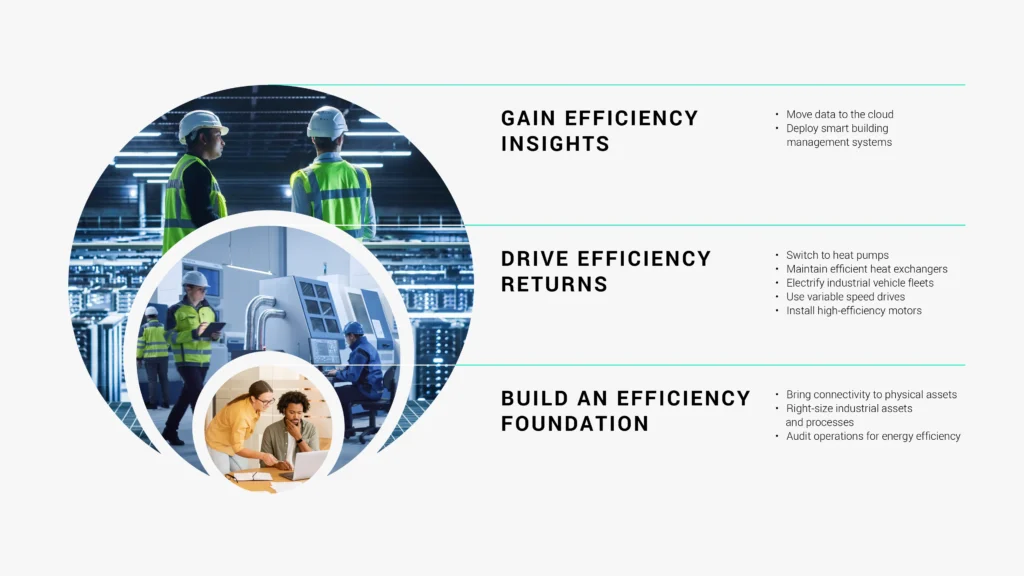
Points to note regarding this approach are:
The relative importance of each pillar, and of the actions within it, will vary from one industrial enterprise to another, although all should be embraced for maximum impact
The order of priority of different actions may differ from one situation to another, but some actions, such as carrying out an energy efficiency audit, are of paramount importance regardless of the strategy.
The actions are not exhaustive, and any efficiency strategy should be designed as an iterative process where initiatives build on each other for continued financial and emissions reduction results.
A final, critical point is that, like any strategic initiative, a comprehensive energy efficiency program is most likely to work if it has executive sponsorship. Therefore the first rule of industrial energy efficiency should always be: make it matter to someone who matters.

Building An Efficiency Foundation
All good transformation projects rely on sound preparatory work. In energy efficiency, the key to success is making sure you know where you are to begin with—and that you are heading in the right direction.
For this reason, the foundation of any efficiency program should be a comprehensive audit that looks at how energy is being used—and where it is being wasted
Carrying out an audit is key to understanding where and how your industrial enterprise will benefit most from energy efficiency interventions.
Audits should be repeated on a regular basis, say every three years, and should be complemented by a program of right-sizing and connecting industrial assets.
The audit will let you see where your business is spending more than it needs on energy and where inefficiencies exist.
Action 1: Understanding your starting point with an energy efficiency audit
The carbon impact
An energy efficiency audit will not deliver reductions in itself but can typically be used to identify savings of up to 20%, depending on the level of detail involved
Why do it?
Most industrial enterprises waste large amounts of energy, yet they do not know it. Oversized machines, assets on standby and poorly maintained hardware all contribute to ghost loads that use up power without any useful output. The only way to locate these loads is to carry out an audit.
Usually undertaken by an established energy service company, an audit will give you a baseline against which to measure progress on efficiency, as well as potentially contributing to broader aims such as the achievement of ISO 50001 certification.
Audits should be repeated at regular intervals and if accompanied by a sensor deployment program can lead to continuous monitoring of energy use across the enterprise, allowing savings to be achieved in real time.
What type of audit should you choose?
The American Society of Heating, Refrigerating and Air-Conditioning Engineers provides standards for three types of audits:
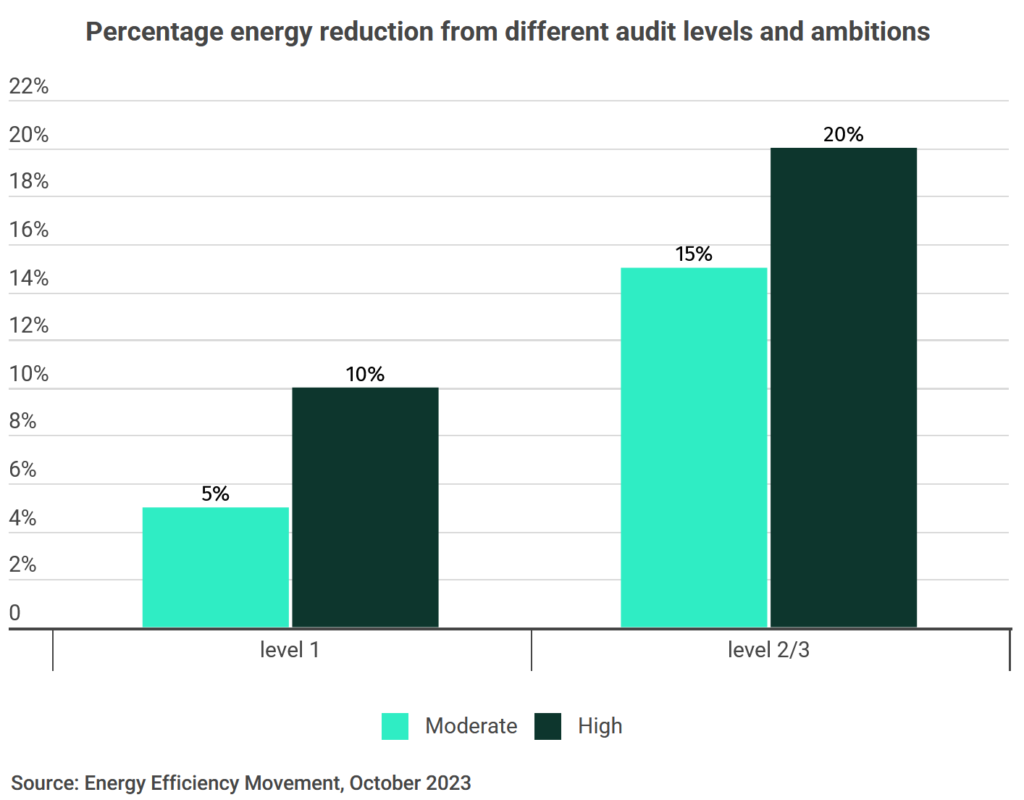
Level 1:
A walk-through assessment, a review of energy bills and other applicable operating data, and interviews with operating staff
Level 2:
Detailed energy calculations and a financial analysis of proposed intervention options
Level 3:
A detailed assessment including sub-metering of major system elements, for interventions with a substantial capital cost
Building the business plan
- Budget around 1% of your total annual energy bills, which will depend on your sector and local power and fuel prices, to pay for the audit
- Allow roughly one to three days for the audit itself, depending on the size and complexity of the process.
- Energy audits do not produce a direct return on investment but bear in mind the average cost savings for a single energy intensive system identified within the U.S. Save Energy Now program was $1.4 million.
Next steps
- Nominate a senior-level champion for energy efficiency. The audit is just the first stage in what is likely to be a highly profitable transformation program.
- Contact energy service companies for quotes and information
- Check for funding and incentive schemes from bodies such as the European Union and the U.S. Industrial Efficiency & Decarbonization Office.
For more information, see our detailed model for this action.
Action 2: Rightsizing industrial assets and processes
The carbon impact
Most industrial assets tend to be oversized for a range of reasons, such as building in safety margins or allowing processes to cope with peaks in demand. The extent to which this oversizing is useful varies greatly from one industrial enterprise to another, however.
While there are no hard-and-fast rules about the level of energy and emissions reductions that can be achieved through right-sizing equipment, the improvements can be significant. In one published example, a company was able to remove an entire packaging line, saving $1 million a year.
Why do it?
Industrial audits often reveal equipment set-ups are larger than needed for the function being performed. This could be because the equipment specification was over-specified in the first place, or more likely because operating conditions have evolved over time.
Oversizing of components can result in excessive energy use and inefficient loadings. You can improve loadings by adjusting settings or reconfiguring production systems. In other situations, it may be better to replace existing assets with more appropriately specified equipment.
Rightsizing can and should be part of the continuing life-cycle management process within a facility. The increasing use of digital sensors in process systems creates considerable opportunities for a flow of data that can be used to identify inefficient equipment loadings.
What type of audit should you choose?
The American Society of Heating, Refrigerating and Air-Conditioning Engineers provides standards for three types of audits:

Building the business plan
- Use the output of your energy efficiency audit to identify right-sizing opportunities.
- Bear in mind that oversizing can be beneficial for IE1 and IE2 rated squirrel-cage induction motors that are in use most of the time. For most IE3 and IE4 motors, oversizing has no cost benefit and right-sizing could yield returns.
- Prioritize right-sizing of assets according to the level of wasted energy involved and the ease of correction, so cost savings from load adjustments and reconfigurations help pay for ma chines that need replacing completely.
Next steps
- Check that your energy efficiency audit gathers enough information to identify rightsizing opportunities.
- Engage with technical experts to ensure right-sizing does not compromise safety and performance margins.
- See if rightsizing can be combined with measures such as the installation of variable speed drives for greater effectiveness.
- Analyze right-sizing opportunities from device up to plant level
For more information, see our detailed model for this action.
Action 3: Bringing connectivity to physical assets
The carbon impact
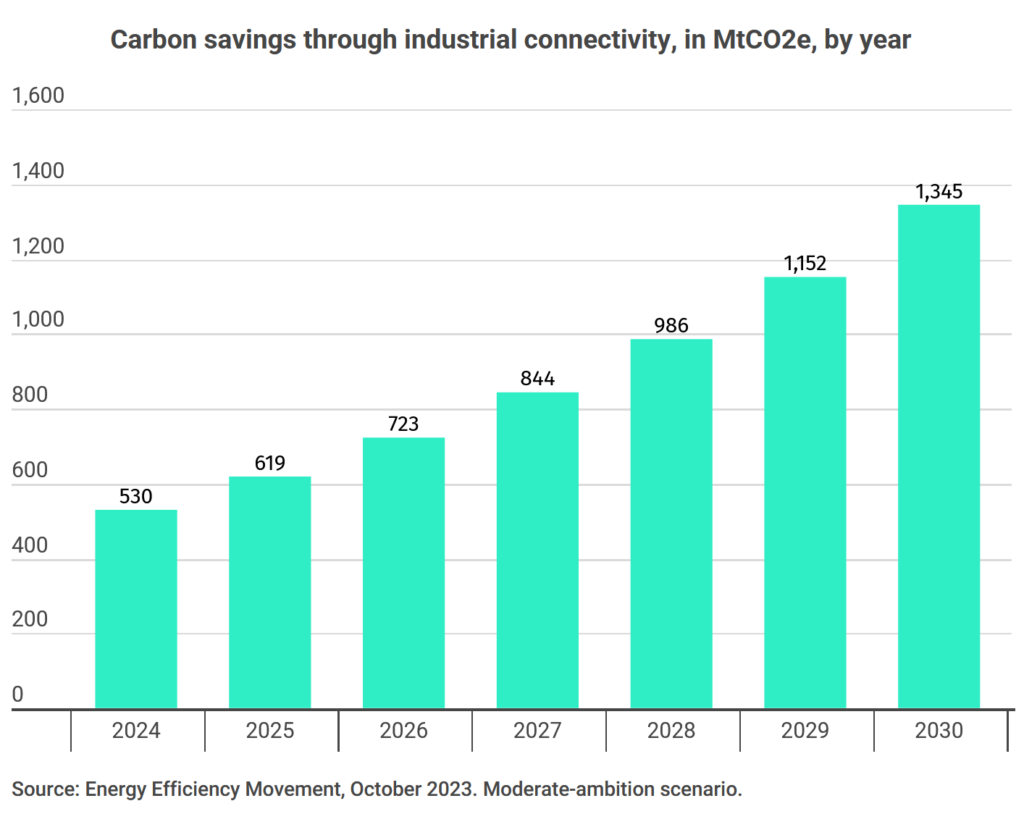
Despite the significant benefits that can be achieved by integrating industrial assets into an Internet of Things (IoT) network, ABB survey data indicates that only around 35% of enterprises have so far undertaken industrial digitization programs at scale.
Such programs could help reduce industrial energy use by between 10% and 30%, based on estimations from organizations such as McKinsey & Company and the American Council for an Energy-Efficient Economy.
The Energy Efficiency Movement estimates that bringing connectivity to currently unconnected industrial assets could save 10% of their electricity and 5% of their natural gas consumption under a low-efficiency scenario, and 22% and 11%, respectively, in a higher growth outlook.
Why do it?
According to Energy Efficiency Movement estimates, simply extending the IoT to cover more industrial assets could cut global emissions by more than 17% between 2023 and 2030—the largest emissions impact of any of the 10 measures analyzed in this guide. But perhaps the greatest driver for industrial asset digitization is financial.
As well as helping assets to run more efficiently, reducing electricity and gas consumption, the IoT can reduce maintenance costs and downtime, improving the productivity and return on investment for a range of industrial processes and facilities.
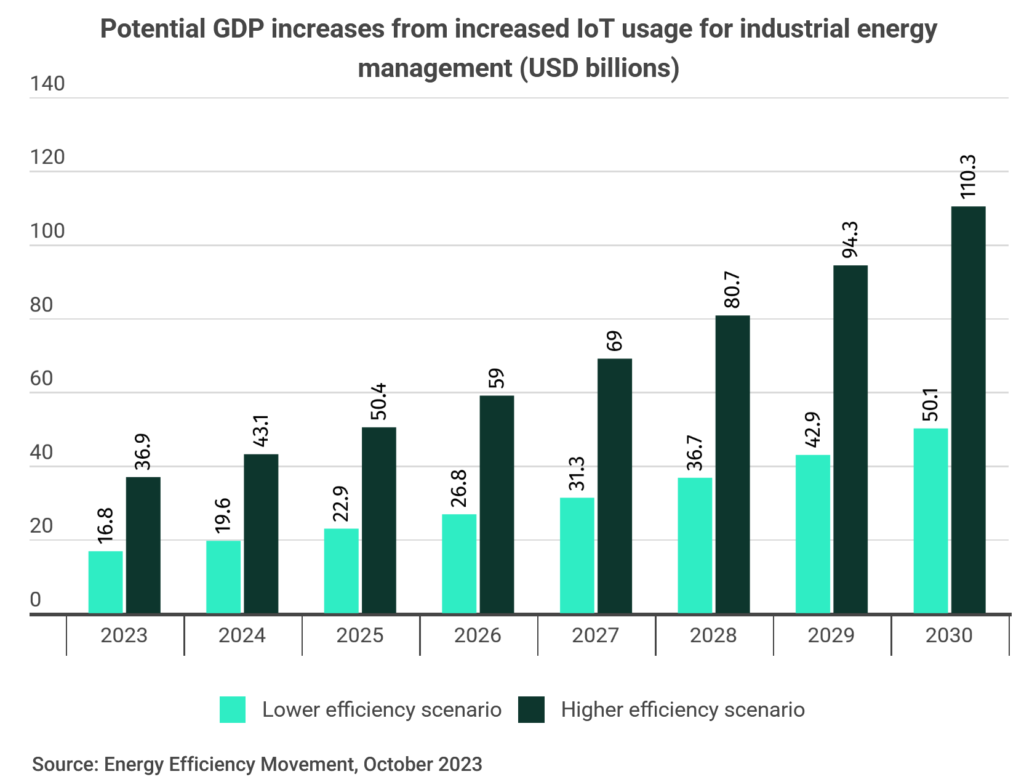
A 2021 report by McKinsey identified that by 2030 the greater use of IoT technology by the industrial sector could generate between $1.43 trillion and $3.32 trillion per annum globally.
The Energy Efficiency Movement estimates global industrial energy efficiency gains could represent up to around $259 billion of this.
Building the business plan
- As noted above, asset digitization can deliver rapid returns on investment not just from reduced energy use but also across a range of other areas.
- Digitization can and should be integrated into any industrial asset upgrade program
- Your IoT business case should focus on solving commercial problems, with a clear definition of potential value and an acknowledgement of how processes and behavior might be affected.
Next steps
- Ascertain the extent to which your industrial assets are already connected, and the options for connecting the rest.
- Find out if your IoT rollout might be eligible for innovation funding or similar sources of support
- See if there are synergies to be gained from combining an IoT project with asset upgrade programs.
For more information, see our detailed model for this action.
Building An Efficiency Foundation
Five of the 10 actions listed in the Energy Efficiency Movement’s Industrial Energy Efficiency Playbook are directly concerned with improving the efficiency of equipment and fleets
These measures generally look to replace existing assets with more efficient ones, upgrading to technologies that have lower losses and can thus reduce emissions.
Having carried out an
audit and rightsized and
connected your assets,
you are in a position to
drive major efficiency gains
across equipment including
motors, drives, vehicle
fleets, heat exchangers and
heat pumps.
These gains can be
achieved through discrete
asset optimization projects
or via an overarching
program at plant or
enterprise level.
Although capital expenditure
will likely be required, there
may be opportunities for
projects and programs to
be significantly self-funded
through reductions in
energy costs.
Action 4: Using high-efficiency motors
The carbon impact
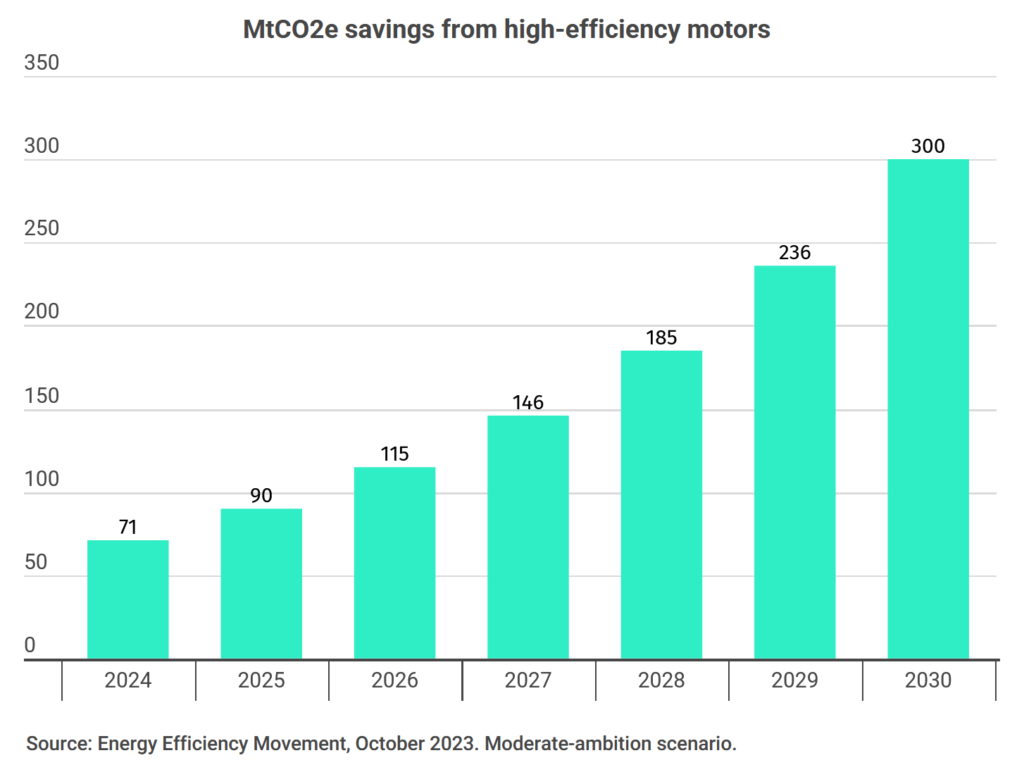
The annual global carbon reductions that could be delivered by 2025 just by using higher-efficiency motors range from 90 to 126 MtCO2e, or up to 0.25% of global emissions caused by human activities.
By 2030, these reductions could increase to between 300 and 450 MtCO2e per annum, or up to 0.9% of global emissions. At fleet level, a moderate-ambition replacement program could cut energy consumption from motors 5% by 2025 and 10% by 2030.
Under a high-ambition scenario, the reductions could equal 7% by 2025 and 15% by 2030.
Why do it?
If you run an industrial enterprise then around two thirds of your electricity consumption—and your electricity-related carbon emissions–likely relates to powering motors in pumps, fans, compressors and other equipment.
If the 300 million-plus industrial electric motor-driven systems operating today were replaced with optimized, high-efficiency versions, worldwide electricity consumption could be cut by up to 10%.
The Energy Efficiency Movement estimates the global commercial and industrial sectors could save up to $68.8 billion a year by 2030 from improved motor efficiency and reduced electricity use. Note that many high-efficiency motor-driven systems require the use of a variable speed drive.
Building the business plan
- Allow for up to a 40% price differential between less and more efficient motors.
- Consult equipment suppliers for help in calculating payback times. These can be under a year.
- Assume that any variable speed drives will already be optimally efficient.
- Build a business plan that addresses the oldest and least efficient motors first.
Next steps
- Create an inventory of electric motors in pumps, heating and ventilation systems and so on.
- Assess the sizing and efficiency of your motors. International efficiency (IE) standards for motors range from ‘standard’ (IE1) to ‘super-premium’ (IE4). An emerging IE5 standard has 20% lower losses than IE4.
- Investigate advances in motor technology. A 110 kW IE5 synchronous reluctance motor and drive package, for example, costs a little over $2,000 more than an IE3 package but could deliver more than $75,000 in savings over a 15-year lifespan.
- Ensure any new motor purchases have the highest efficiency possible
For more information, see our detailed model for this action.
Case Study: Improving the efficiency of motors
Vinyl flooring maker Tarkett is taking steps to become more sustainable—and has quickly realized the benefit of focusing on motors.
Following an energy appraisal at its factory in Ronneby, Sweden, the manufacturer gathered data on 10 connected motors and built a case for upgrading assets to more efficient IE5 synchronous reluctance motor technology relying on variable speed drives.
This allowed the company to boost motor efficiency from 80% to 95%, saving 800 megawatt-hours of electricity a year. The energy savings allowed the investment in motors to be repaid within 18 months, while also reducing Tarkett’s carbon footprint.
Tarkett is now using digital technology for ongoing monitoring of its powertrains, ensuring that efficiency gains can be sustained.
Learn more about Tarkett’s energy efficiency journey.
Action 5: Using variable speed drives
The carbon impact
The annual global carbon reductions that could be delivered by 2025 just by using variable speed drives in industrial and commercial applications ranges from 40 to 70 MtCO2e, or around 0.1% of global emissions from human activities.
By 2030, these reductions could increase to between 141 and 188 MtCO2e per annum, or around 0.4% of global emissions. At fleet level, a moderate ambition program could cut the energy consumption of electric motor-driven systems by 4.8% by 2025 and 9.6% by 2030.
Under a high-ambition scenario, the reductions could equal 6.3% by 2025 and 12.8% by 2030.
Why do it?
If you run an industrial enterprise then around two thirds of your electricity consumption—and your electricity-related carbon emissions–likely relates to powering motors in pumps, fans, compressors and other equipment.
If the 300 million-plus industrial electric motor-driven systems operating today were replaced with optimized, high-efficiency versions, worldwide electricity consumption could be cut by up to 10%.
The Energy Efficiency Movement estimates the global commercial and industrial sectors could save up to $68.8 billion a year by 2030 from improved motor efficiency and reduced electricity use. Note that many high-efficiency motor-driven systems require the use of a variable speed drive.
Building the business plan
- For maximum effectiveness, a variable speed drive upgrade plan should be carried out alongside a wider high-efficiency motor replacement program.
- Bear in mind not all drives may be suited to variable speed. Get expert advice on upgrading your drive estate.
- Variable speed drive savings and payback times are sensitive to electricity costs, so make sure realistic power price forecasts are built into your plan.
Next steps
- Scope the variable speed upgrade opportunity within your drive estate.
- Investigate likely long-term power pricing trends to model savings accurately.
- Focus upgrade efforts on drives that have variable loads, such as driving fans or pumps, or where torque is largely independent from speed, for example in escalators or hoists.
For more information, see our detailed model for this action.
Action 6: Electrifying industrial vehicle fleets
The carbon impact
Road transport is a clear contributor to climate change and fleet electrification reduces emissions under all scenarios. However, the exact emissions reductions that can be achieved through fleet electrification will depend on a number of variables, such as the emissions intensity of the grid.
In 2020, global emissions from heavy trucks and light duty vehicles amounted to 5,068 MtCO2e. A 30% reduction in emissions due to electrification could save 1,560 MtCO2e, or around 2.9% of global emissions from human activities by 2025.
At fleet level, electric vehicles (EVs) can cut emissions by about 17% on traditional grids and 30% on electricity from mostly renewable sources. By 2050, the reduction in emissions could amount to 70% under a decarbonized grid scenario.
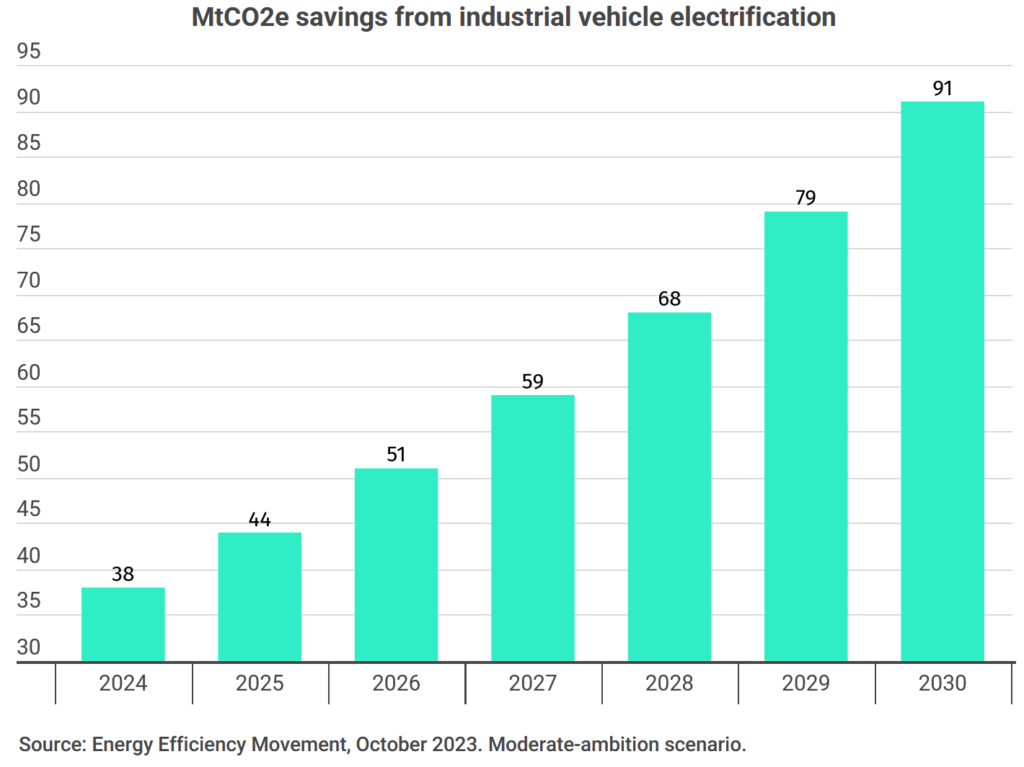
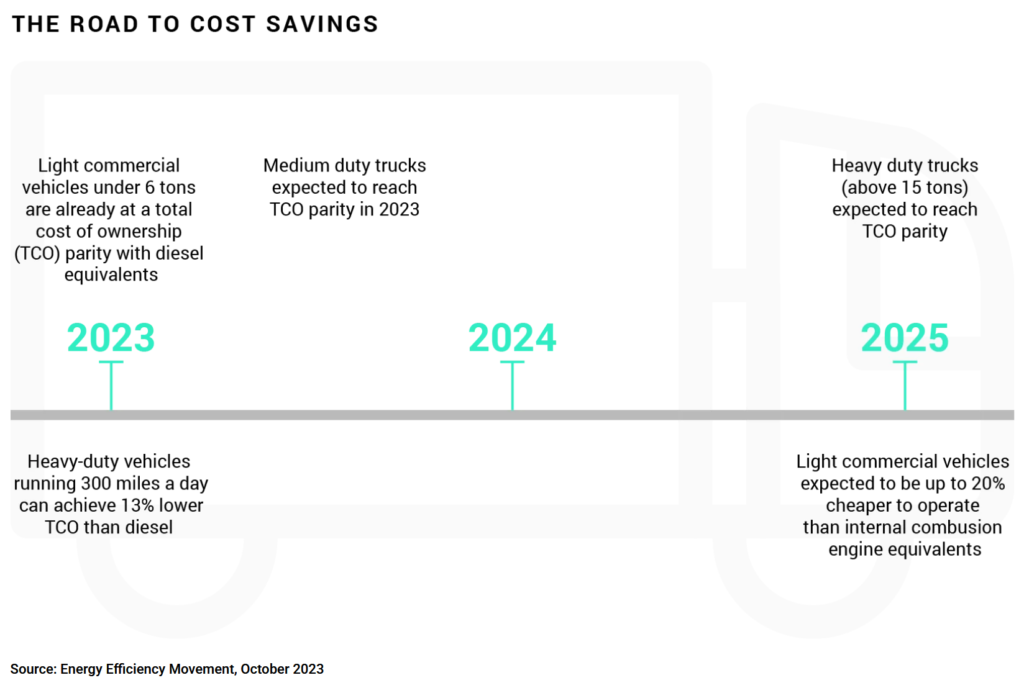
Note that industrial vehicle electrification is not expected to be a major contributor to decarbonization in the time horizon used in this guide (up to 2030), because of the time it will take for electric heavy goods vehicles to become cost effective and for companies to replace their fleets.
In line with IEA estimates regarding EV impacts on the path to net zero, these effects are expected to increase significantly after 2030.
Nevertheless, vehicle electrification can already be of value—in financial and emissions reductions terms—for fleets with a significant proportion of light commercial vehicles.
Why do it?
Transportation generally accounts for 30% of global emissions and road transport around 15%. Electrifying fleets cuts these emissions by up to 30% based on today’s cleanest grids.
Electrification also reduces other pollutants, allowing access to low-emissions zones, and cuts costs over the lifetime of a vehicle by reducing exposure to volatile fuel markets. Lifetime costs and vehicle downtime are also reduced through lower servicing and maintenance requirements.
Beyond the environmental and cost savings, vehicle electrification provides an important social benefit by reducing levels of airborne pollutants. Research shows vehicle exhaust fumes caused 385,000 premature deaths in 2015 alone, at a cost of $1 trillion.
Building the business plan
- Check for incentives, which vary by industry
- Prioritize light commercial vehicle replacement as this will deliver earlier and greater savings than medium and heavy-duty trucks.
- Indicative savings are 1.7% or $2,775 a year for light commercial vehicles, 1.4% or $3,250 for medium-sized trucks and 1.1% for heavy-duty lorries, at 2021 prices.
Next steps
- Acquire data on current age and composition of fleet, plus annual mileage.
- Model savings under standard and accelerated replacement rates.
- Investigate EV incentive schemes and incorporate them into your calculations
For more information, see our detailed model for this action.
Action 7: Maintaining efficient heat exchangers
The carbon impact
Heat exchangers are used widely across the commercial and industrial sectors, in areas such as building heating and air conditioning, refrigeration, and data center and fuel cell cooling, yet they are rarely maintained adequately. Remarkably, this lack of maintenance alone could account for up to 2.5% of global carbon emissions – roughly the equivalent of the entire airline industry. And new heat exchangers can be up to 25% more efficient than old ones.
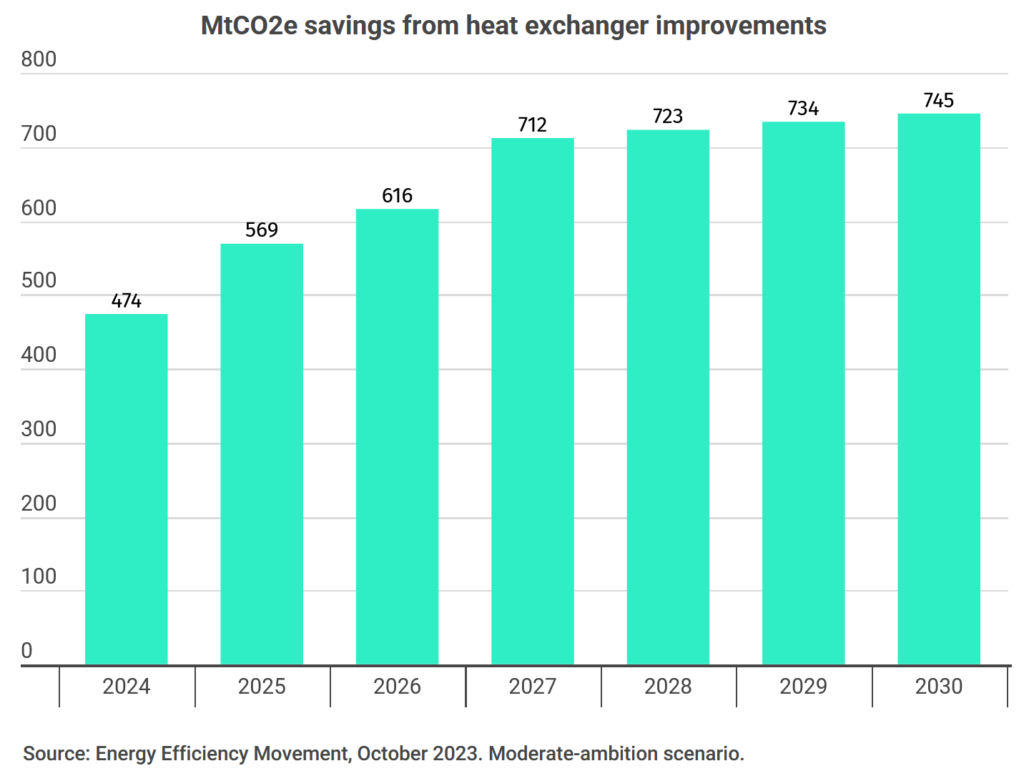
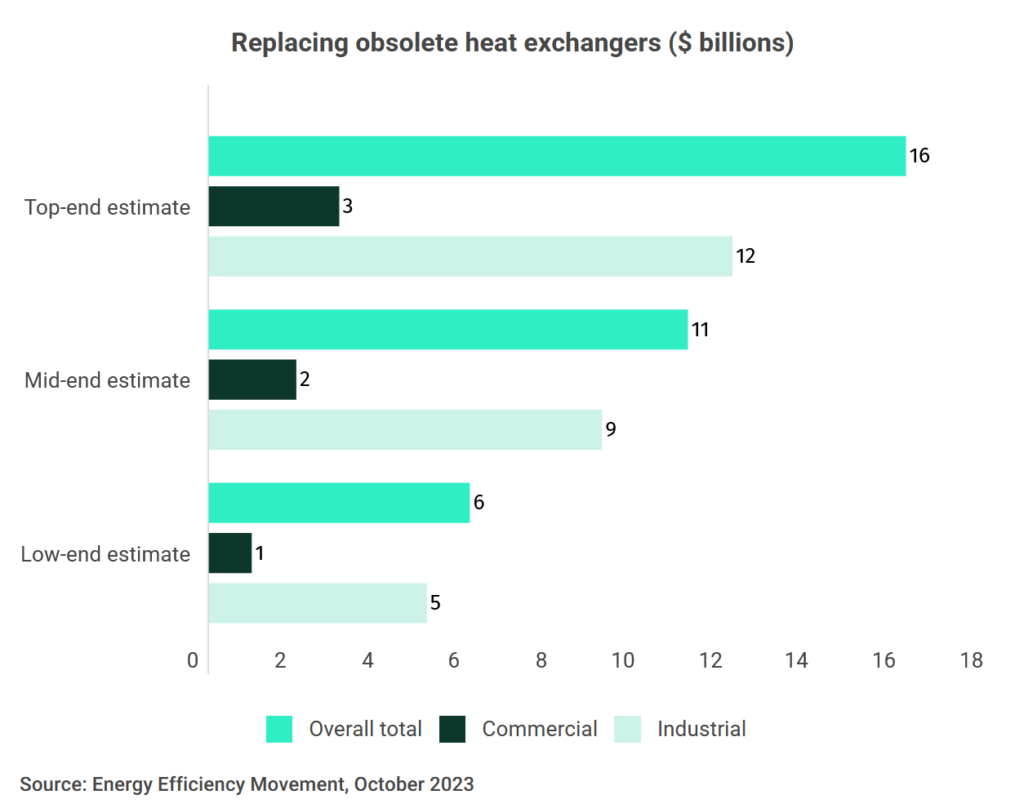
The Energy Efficiency Movement estimates that the replacement of obsolete heat exchangers in industrial and commercial settings could save between 136 and 339 MtCO2 a year, assuming the new equipment remained well maintained.
Why do it?
Energy Efficiency Movement research shows that between 271 and 678 megatons of carbon dioxide were emitted in 2019 as a result of unmaintained heat exchangers in industrial and commercial situations. The mid-point was 474 megatons and 83% of this figure was from industrial users.
All of these can be addressed simply and cheaply through the implementation of a regular cleaning regime as part of a planned maintenance program. The introduction of a regular cleaning regime would also result in commensurate savings in energy usage and bills.
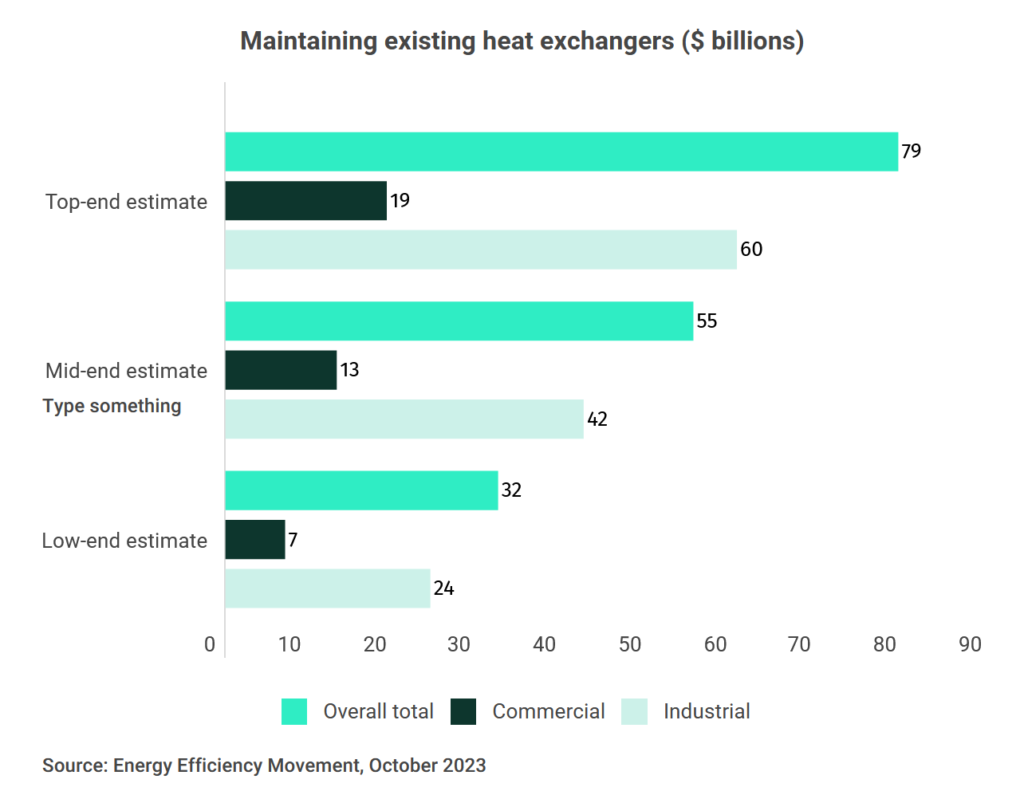
Mid-range estimates point to annual savings of almost $55.3 billion for industrial and commercial users of heat exchangers.
How much the industry would save on…
Building the business plan
-
Bear in mind that significant financial and carbon emissions savings can be achieved without any capital outlay—all that is needed is a review of maintenance contracts and arrangements to ensure heat exchangers are properly maintained.
- As part of standard asset replacement cycles, seek to upgrade old shell-and-tube heat exchangers with plate technology, which can be 25% more efficient.
- See if it is possible to re-use waste heat in other processes, such as space heating. Up to 50% of industrial energy input is lost as waste heat.
Next steps
- Review current heat exchanger maintenance arrangements and audit the efficiency of your existing assets.
- Assess what proportion of your heat exchanger fleet may be due for renewal and/or upgrading.
- Investigate the possibility of using waste heat in other applications.
For more information, see our detailed model for this action.
Action 8: Switching to heat pumps
The carbon impact
Heat pumps are extremely efficient, effectively giving back more energy than you put into operate them. In time, it is likely that all low-temperature and many mid-temperature industrial applications, such as drying and ethylene processing, will use heat pumps.
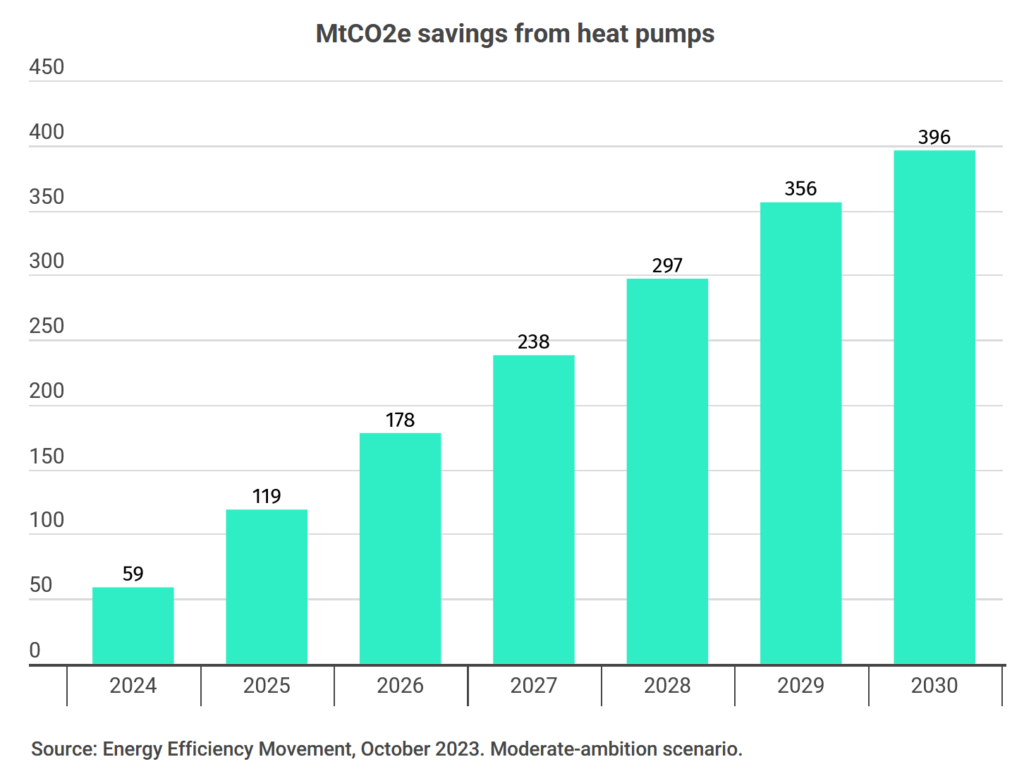
Given that the pace of heat pump deployment is subject to factors such as the availability of government incentives, our calculations for potential impact are not bound by dates and are set against forecast 2030 emissions for illustrative purposes.
Why do it?
The generation and use of process heat accounts for just over half of on-site industrial energy use. Heat pumps can be used where there is a need for process heat up to 180 C/356 F.
More than 95% of process heat generation comes from fossil fuels, so substituting conventional boilers with heat pumps could help with the decarbonization of a significant proportion of on-site industrial energy use.
Heat pumps are already widely used in industries such as timber processing, food and drink manufacturing, chemicals and water treatment and supply, so this is a mature technology that is easy to implement.
Heat pumps for space heating and cooling are suitable for both retro-fit and new-build, and they can work alongside existing heating systems in a hybrid arrangement.
Building the business plan
- The payback period for heat pumps is under five years for a wide range of industrial applications.
- The shortest paybacks (from 1.9 to 2.2 years) tend to be found in the chemical sector.
- Research indicates around 27% of commercial floorspace currently heated with fossil fuel systems in the United States could be electrified with a payback of less than 10 years.
Next steps
- Check for incentives, which are widely available in many markets.
- Review all enterprise heating needs, including space heating in offices and warehouses.
- Model savings using best-estimate forecasts of future fossil fuel and electricity prices.
For more information, see our detailed model for this action.
Gaining efficiency insights
Having accurate, timely data on energy use is critical for understanding how well efficiency measures are working. Hence, any efficiency initiative should be preceded or accompanied by a process of data acquisition and control.
These measures generally look to replace existing assets with more efficient ones, upgrading to technologies that have lower losses and can thus reduce emissions.
While the previous actions
target discrete types of industrial assets, a final
class of energy efficiency
measures has to do with
using data for facility or
enterprise-wide gains.
To achieve this, you first
need to deploy sensor
networks for real-time monitoring and control.
A final action concerns how
data itself is stored and handled.
Action 9: Deploying smart building management systems
The carbon impact
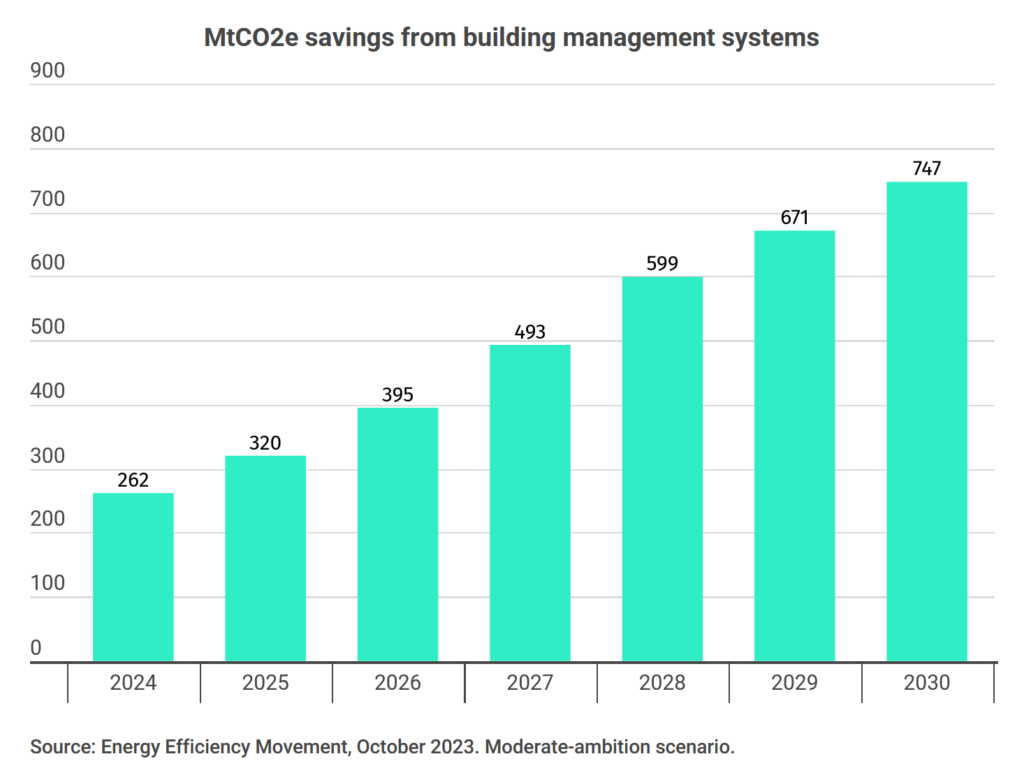
Heat pumps are extremely efficient, effectively giving back more energy than you put in to operate them. In time, it is likely that all low-temperature and many mid-temperature industrial applications, such as drying and ethylene processing, will use heat pumps
Why do it?
Heating, ventilation and air conditioning (HVAC) systems alone are associated with more than 40% of a typical commercial building’s energy load, with around 35% of this usually wasted. A BMS can control up to around 70% of a building’s energy load if lighting is included as well.
Combining artificial intelligence with a digital BMS can cut HVAC emissions by as much as 40% and reduce energy costs by 25%. A smart BMS can save substantial proportions of a building’s energy use costs through detection, diagnostic, historical analysis and predictive capabilities.
For example, the deployment of smart BMS in a facility in Bengaluru, India, resulted in building operational and management cost savings of up to 10% and a 19% saving in energy management costs. The deployment of smart BMS also resulted in emissions savings of up to 34%.
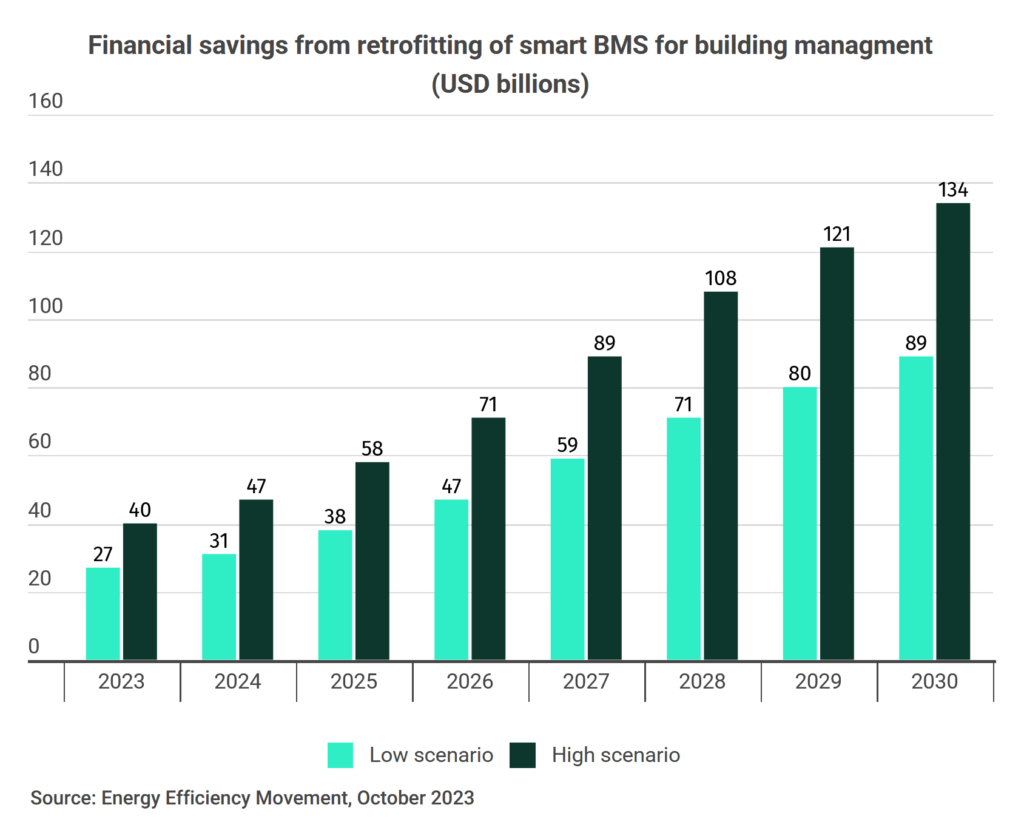
How much could industry save through BMS adoption?
Building the business plan
- The majority of commercial buildings that have been constructed over the past two decades are likely to have a BMS installed from the outset, although in some cases there may be benefits to updating older systems.
- A digital BMS will usually offer the greatest benefit in older commercial buildings that do not have a system installed.
- Research indicates around 75% of buildings built before the year 2000 fall into this category.
Next steps
- Carry out an audit of global facilities to determine which ones already have BMS installations, and from when.
- Focus on the oldest, highest-energy-use buildings when prioritizing BMS deployment.
- Consider combining BMS installations as part of wider IoT deployment programs, to maximize the value of in-building sensor networks.
For more information, see our detailed model for this action.
Case Study: Creating energy-efficient buildings
ABB is not only concerned with helping its customers to reduce emissions but is also aiming to cut its own carbon footprint with a strategic program called Mission to Zero. As part of the program, ABB wanted to achieve carbon neutrality at its Porvoo manufacturing site in Finland
It was able to make a meaningful contribution to decarbonization by installing a 375-kilowatt photovoltaic generation system, which reduced Porvoo’s emissions by 636 tons of carbon dioxide a year. But a large part of the net-zero target was achieved through smart building technologies
These allow the facility manager to monitor energy flows and report on consumption, cost and carbon emissions. Digital technologies help to ensure optimum lighting based on occupancy, while more than 93% of the site’s heating has been electrified.
In its first year after introducing the new measures, ABB saw energy efficiency rise by 21%. As well as achieving its net-zero goal, Porvoo has become the first ABB site to use geothermal energy and to recycle energy from its factory production processes.
Action 10: Moving data to the cloud
The carbon impact
Data center owners have a significant incentive to improve energy efficiency. Electricity use, for server power and climatization, is usually by far the biggest cost associated with data centers, so using energy as efficiently as possible carries a major financial benefit. However, upgrading in-house data centers is no easy task, particularly if they are hosting critical enterprise applications.
This is one reason why enterprise workloads are increasingly being hosted in the cloud, where third-party providers purchase, maintain and upgrade the IT hardware, and can negotiate favorable (and to a growing extent clean) energy sourcing terms from power providers.
Cloud hosting can give companies access to more scalable and flexible computing and data storage infrastructures, including server virtualization, managed by specialists that are highly focused on efficiency and may even be reducing emissions through the use of renewable energy.
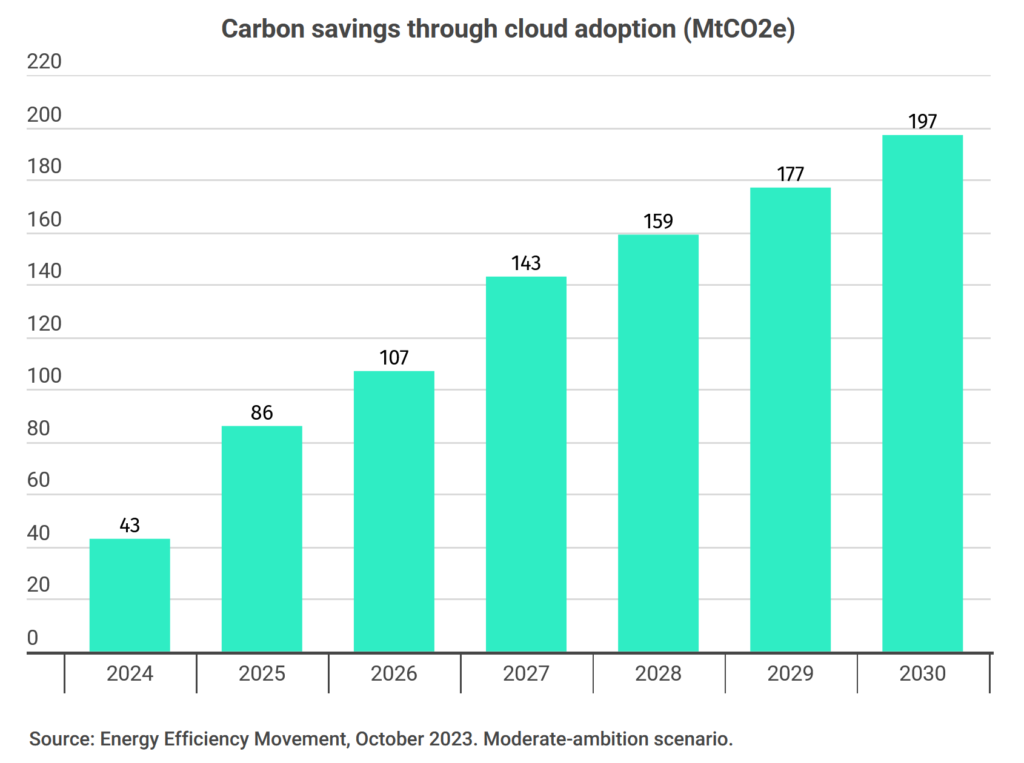
Why do it?
There are at least three reasons cloud data center operators will tend to have greater efficiency savings than individual on-premises data storage and compute arrangements:
- Cloud computing and co-location facilities usually operate at a much higher level of efficiency compared to smaller, on-premises servers. In cloud data centers, prediction and monitoring of demand can help ensure that over-provisioning of supply can be more easily avoided compared to on-premises provision.
- Energy use accounts for a significant percentage of a cloud operator’s overall operating expenses, so there is a strong financial incentive to optimize the operational efficiency of IT equipment.
- Advanced infrastructure technologies in hyperscale data centers reduce the energy for lighting and cooling the facility.
Building the business plan
- For many companies, the cloud can be a less expensive alternative to continued on-premises data management. But the extent to which financial savings are achievable from a switch to the cloud is influenced by a range of variable.
- These include the size of the business making the transition, costs and inefficiencies embedded in the existing architecture, decisions around whether investment in a single cloud versus multi-cloud is appropriate and legacy costs associated with on-premises data processing facilities.
- Research suggests that while the cloud can be initially more expensive than on-premises data management, because of migration investment costs, cloud-based services will usually become cost-effective over time.
Next steps
-
Efficiency is only one factor to consider when contemplating cloud migration— organizational capabilities such as improved speed and business agility may be some of the biggest benefits—so review the technological and regulatory pros and cons of embarking on the move.
-
Consider the extent to which your business may already be using cloud-based applications and services and see if and how these can be extended cost effectively.
-
Choose cloud hosting for the data you collect and manage as part of your other energy efficiency initiatives.
For more information, see our detailed model for this action.

Conclusion
The time to address energy efficiency is now
While the previous actions target discrete types of industrial assets, a final class of energy efficiency measures has to do with using data for facility or enterprise-wide gains.
To achieve this, you first need to deploy sensor networks for real-time monitoring and control.
A final action concerns how
data itself is stored and handled.
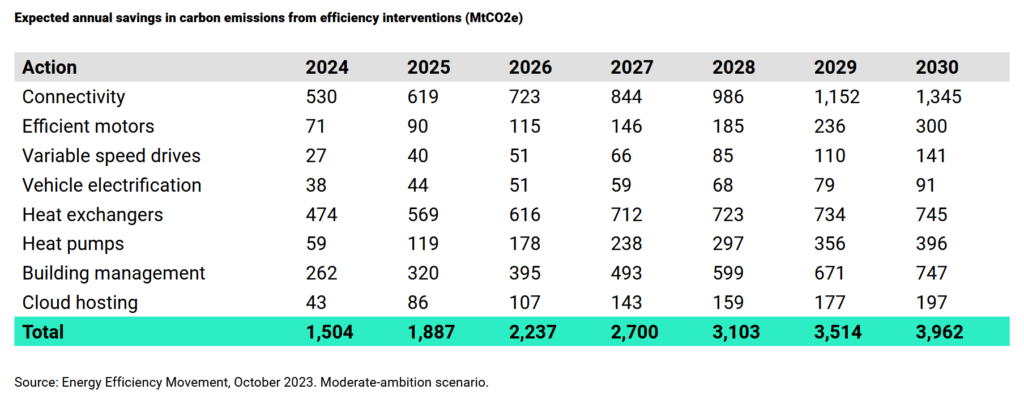
The measures described in this guide could be delivering more than 1.5 gigatons of carbon savings by 2024, rising to nearly 4 gigatons by 2030.
This is based on midpoint scenarios, yet still equates to an 11% reduction in forecast global carbon emissions through 2030. Assuming the more ambitious scenarios, the savings could increase to 5.3 gigatons by 2030, or around 15% of emissions that year
In either case, it is clear that industrial energy efficiency will be key in achieving net zero targets in the coming years. And for five of the 10 actions where financial savings can be meaningfully calculated, industry could be saving nearly $172 billion a year by 2024, and around $437 billion annually by 2030.
This could add close to $265 billion to global GDP by the end of the decade under a higher-ambition scenario.
Again, these estimates could likely be on the low side since there are five actions in this guide, including audits, rightsizing equipment and electrifying vehicle fleets, where the financial returns are highly dependent on individual business cases and thus are not quantified here.
Compared to adapting industrial processes to low-carbon fuels and feedstocks, for example, relatively little effort is required to embrace energy efficiency and enjoy its benefits.
Most of the actions contained in this guide relate to existing assets and where capital outlays are required these can often be integrated into standard equipment replacement cycles. Funding may also be available through government incentives for many of the actions listed in this guide.
Finally, there are several additional social and environmental benefits to energy efficiency that have not been calculated in our analysis but are important to consider. These include:
Improved resource utilization
Efficiency helps reduce the level of raw materials required for industrial assets and processes, minimizing the impact of extraction and processing activities on natural ecosystems and local communities.
Better health
Carbon emissions from vehicles and power generation are linked to air pollution that is responsible for an estimated 4.2 million deaths a year.
Higher productivity
More efficient equipment often runs for longer, improving the return on investment for industrial assets.

Join the Energy Efficiency Movement now and accelerate on your journey to net zero today.
Appendix: summary of carbon savings by action
Downloads
10 key energy efficiency actions for industrial leaders
Based on 1.49 billion cars on the roads in 2023 and an average annual carbon foot print of 4.6 tonnes of CO2 per vehicle.
Sources: “Transportation Energy Data Book, Edition 40,” Oak Ridge National Laboratory, US Department of Energy, March 2022; “Green Vehicle Guide,” US Environmental Protection Agency, September 2023.
https://tedb.ornl.gov/wp-content/uploads/2022/03/TEDB_Ed_40.pdf
https://www.epa.gov/greenvehicles/greenhouse-gas-emissions-typical-passenger-vehicle
About the numbers in this guide
The figures in this guide refer to global amounts, with financial savings net of investment costs.
The results for emissions reduction, industry savings and gross domestic product (GDP) growth are based on modeling commissioned by the Energy Efficiency Movement from Development Economics, an independent economic impact assessment provider.
From May to October 2023, Development Economics undertook rigorous modeling of the economic and emissions outlook for each action in this guide.
This modeling incorporated the best available data and included input from subject matter experts at leading industrial players including ABB, Alfa Laval and Microsoft. Expert advice was also provided by the IEA.
The models include optimistic, mid-range and pessimistic scenarios based on ranges in the underlying data. Each model, and the details of how it was developed, can be accessed via links in the respective actions in this guide.
The headline figures cited in the introduction are based on mid-range scenarios.
Nevertheless, all totals have been calculated so as to avoid double counting; for actions where an emissions or economic value was difficult to ascertain, the value has been set to zero rather than using an arbitrary estimate.
The approach taken in our assessment has been to quantify the anticipated scale of avoided carbon emissions, in line with the GHG Protocol. An “avoided emission” in this case is the difference between carbon emissions that would occur through the implementation of an action contained within the IEEP, and the emissions that would have occurred in the absence of an implemented IEEP action.
Per the World Business Council for Sustainable Development’s “Guidance on Avoided Emissions” (published March 2023), “avoided emissions are emission reductions that occur outside of a [solution’s] life cycle or value chain, mainly as a result of the use of that [solution]. Due to their forward-looking nature, avoided emissions are the result of a comparative exercise between emissions associated with an identified reference scenario and emissions associated with the solution (the intervention).”
The analysis presented herein relies on the IEA’s Stated Policies Scenario (SPS) as the reference scenario. Every care has been taken to rely on the most authoritative numbers available for modeling, with a particular emphasis on using IEA data current as of September 2023.
The models have been built assuming reasonable technology adoption curves and validated against third-party sources where possible. In cases where our values or definitions differ from those of the IEA, this has been made clear within the modeling documents.
However, no model can ever be definitive. We intend these models to act as an invitation for your business to carry out its own analysis and, where possible, share data on real outcomes through the Energy Efficiency Movement.
